Quotessence
Home / Quotes / Quote by James Joyce

Quote by James Joyce

Work

A Portrait of the Artist as a Young Man / Dubliners

Browse quotes and source details for this work. more

Author
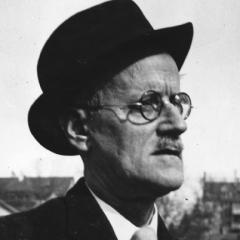
James Joyce
James Joyce

James Joyce, born on February 2, 1882, and died on January 13, 1941, was an Irish novelist and one of the greatest writers of the 20th century. Known for his unique narrative techniques and profound psychological insights, Joyce is celebrated for his contributions to modernist literature. His most famous work is 'Ulysses', which is considered one of the greatest literary works of the 20th century. Other notable works include 'Dubliners' and 'Finnegans Wake'. more

You May Also Like

“Dickinson left the rostrum to applause, loud shouts of approval. Franklin was surprised, looked toward Adams, who returned the look, shook his head. The chamber was dismissed, and Franklin pushed himself slowly up out of the chair. He began to struggle a bit, pain in both knees, the stiffness holding him tightly, felt a hand under his arm. “Allow me, sir.” Adams helped him up, commenting as he did so, “We have a substantial lack of backbone in this room, I’m afraid.” Franklin looked past him, saw Dickinson standing close behind, staring angrily at Adams, reacting to his words. “Mr. Dickinson, a fine speech, sir,” said Franklin. Adams seemed suddenly embarrassed, did not look behind him, nodded quickly to Franklin, moved away toward the entrance. Franklin saw Dickinson following Adams, began to follow himself. My God, let’s not have a duel. He slipped through the crowd of delegates, making polite acknowledgments left and right, still keeping his eye on Dickinson. The man was gone now, following Adams out of the hall. Franklin reached the door, could see them both, heard the taller man call out, saw Adams turn, a look of surprise. Franklin moved closer, heard Adams say, “My apologies for my indiscreet remark, sir. However, I am certain you are aware of my sentiments.” Dickinson seemed to explode in Adams’ face. “What is the reason, Mr. Adams, that you New England men oppose our measures of reconciliation? Why do you hold so tightly to this determined opposition to petitioning the king?” Franklin heard other men gathering behind him, filling the entranceway, Dickinson’s volume drawing them. He could see Adams glancing at them and then saying, “Mr. Dickinson, this is not an appropriate time...” “Mr. Adams, can you not respond? Do you not desire an end to talk of war?” Adams seemed struck by Dickinson’s words, looked at him for a long moment. “Mr. Dickinson, if you believe that all that has fallen upon us is merely talk, I have no response. There is no hope of avoiding a war, sir, because the war has already begun. Your king and his army have seen to that. Please, excuse me, sir.” Adams began to walk away, and Franklin could see Dickinson look back at the growing crowd behind him, saw a strange desperation in the man’s expression, and Dickinson shouted toward Adams, “There is no sin in hope!”

“I mean to tell you, the Law's notion of justice is more cold-blooded than any outlaw I ever knew. And I mean 'outlaw,' not criminal. 'Criminal' doesn't distinguish between guys like men and the guys who own the banks and insurance companies and stock markets, who own the factories and coal mines and oil fields, who own the goddamn Law. I once said to John that being an outlaw was about the only way left for a man to hold on to his self-respect, and he said Ain't that the sad truth. The girls laughed along with us because they knew it wasn't a joke.... John got the publicity because he loved it ... he carried on like the whole thing was an adventure movie and he was Douglas Fairbanks. He wanted to to be a 'star.' That's how he was. Not me. I never even liked having my picture taken. All I ever wanted was to show the bastards who own the law that it didn't mean they owned me.”

“If Los Angeles is a woman reclining billboard model and the San Fernando Valley is her teenybopper sister, then New York is their cousin. Her hair is dyed autumn red or aubergine or Egyptian henna, depending on her mood. Her skin is pale as frost and she wears beautiful Jil Sander suits and Prada pumps on which she walks faster than a speeding taxi (when it is caught in rush hour, that is). Her lips are some unlikely shade of copper or violet, courtesy of her local MAC drag queen makeup consultant. She is always carrying bags of clothes, bouquets of roses, take-out Chinese containers, or bagels. Museum tags fill her pockets and purses, along with perfume samples and invitations to art gallery openings. When she is walking to work, to ward off bums or psychos, her face resembles the Statue of Liberty, but at home in her candlelit, dove-colored apartment, the stony look fades away and she smiles like the sterling roses she has brought for herself to make up for the fact that she is single and her feet are sore.”