Quotessence
Home / Quotes / Quote by George Orwell

Quote by George Orwell

“We are the dead . Our only true life is in the future. We shall take part in it as handfuls of dust and splinters of bone.”

Quote by George Orwell

Book:1984

Work

1984

George Orwell's '1984' is a seminal work of literature that explores themes of government control, individuality, and the erosion of privacy. The story is set in a future where the world is divided into three superstates, each engaged in perpetual war. The protagonist, Winston Smith, works for the Ministry of Truth and is disillusioned with the oppressive regime. The novel delves into the psychological and societal consequences of living under constant surveillance and the struggle for truth and freedom. more
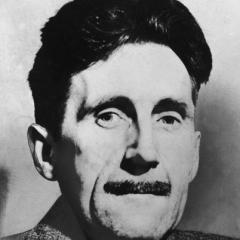
Author

George Orwell
George Orwell

George Orwell, born Eric Arthur Blair, was a British novelist and political critic. Known for his sharp social criticism and profound insights into totalitarianism, Orwell is best remembered for his novels '1984' and 'Animal Farm', which remain influential to this day. more

You May Also Like

“I have no interest in eliminating the tension between justice and forgiveness by taking justice off the table. Given the subtleties of sin and the persistence of evil, we would soon be living in moral anarchy and political chaos if there were no provision for justice.”

“There was something distinctly American about it all, a fundamental difference in perspective and place–in how they saw themselves in the world. And this was what made it so American–not that they felt compassion for mistreated workers three continents away, workers they had never seen or known, whose world they could not begin to understand, not that they felt guilty about their privilege, no,no not that either, but that they felt the need to do something. That they felt they had to power to do something about it. That was what made it so American. That they felt they had the power to do something–they assumed they had that power. They had been born with it–the ability to change the world–and had never questioned its existence, an assumption so massive as to remain unseen. The power and the responsibility to protect the people they imagined as powerless. The poor defenseless people of the Third World. He felts a sudden queasy sadness. What if they knew what a real revolutionary was? How bloody a real revolution. He looked around, suddenly feeling the need to sit, and saw nothing but their faces, their round wet faces staring back at him. What a violence of spirit not to know the world.”

“The space between the private and the public is the nexus of the personal and the social, if not political. It’s where we meet the strong or subtle cultural censors who attempt to define what community, race, class, or gender can or cannot speak, to tell us which stories are told and valued and which are not. In short, it’s where we’re reminded of the power of personal stories and the power of the storyteller.”

“It hurts to let go. Sometimes it seems the harder you try to hold on to something or someone the more it wants to get away. You feel like some kind of criminal for having felt, for having wanted. For having wanted to be wanted. It confuses you, because you think that your feelings were wrong and it makes you feel so small because it's so hard to keep it inside when you let it out and it doesn't coma back. You're left so alone that you can't explain. Damn, there's nothing like that, is there? I've been there and you have too. You're nodding your head.”