Quotessence
Home / Quotes / Quote by Thomas Hardy

Quote by Thomas Hardy

“The only exercise that Tess took at this time was after dark; and it was then, when out in the woods, that she seemed least solitary... She had no fear of the shadows; her sole idea seemed to be to shun mankind—or rather that cold accretion called the world, which, so terrible in the mass, is so unformidable, even pitiable, in its units.”

Quote by Thomas Hardy

Work

Tess of the D’Urbervilles

Browse quotes and source details for this work. more

Author
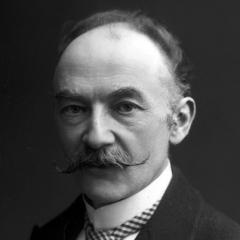
Thomas Hardy
Thomas Hardy

Thomas Hardy, a British novelist born on June 2, 1840, and died on January 11, 1928, is renowned for his novels that depict rural life, reflecting the social changes in 19th-century England. His works often carry a sense of pessimism, depicting the fates of characters with sympathy. more

You May Also Like

“We enter this universe alone in search of microscopic beauty—and while we love, or are loved by others—we leave this world completely alone, having only found infinite sorrow. Despite there being so many of us, each of us tragically realizes that everyone is on a solitary journey. No one else can see what we see, hear what we hear, feel, what we feel. All we have of each other are glimpses of moments, whispers of experiences, memories of the past we wish we could make eternal, but in the end, we become a faint memory in the minds of a few good people.”

“The more we speak of solitude, the clearer it becomes that at the bottom it is not something one can choose to take or leave. We are lonely. One can deceive oneself about it and act as if it were not so. That is all. But it is so much better to see that we are so, indeed even to presuppose it. It will make us dizzy, of course; because all the focal points on which our eyes were used to resting are taken away from us, there is nothing near us anymore, and everything distant is infinitely distant.”

“For the first time after so many years I come back to cry aloud in the desert. Because this is the mission of the intellectual who is truly a prophet—to cry in the desert. The greatest of the prophets, Isaiah, made it notable, of course, when he spoke of himself as the voice of one "crying in the wilderness." Because the mission of the intellectual is to be the man who, from his desert, his basic solitude—and man is only man amid his truth, only himself when he is alone—cries aloud to others and invites them to each into his own solitude.”