Quotessence
Home / Quotes / Quote by Robert M. Sapolsky

Quote by Robert M. Sapolsky

“Say I decide that it would be a good thing to insert pictures here demonstrating cultural relativism, displaying an act that is commonsensical in one culture but deeply distressing in another. I know, I think, I'll get some pictures of a Southeast Asian dog meat market. Like me, most readers will likely resonate with dogs. Good plan! On to Google Images and the result is that I spend hours transfixed, unable to stop, torturing myself with picture after picture of dogs being carted off to market. Dogs being butchered, cooked and sold. Pictures of humans going about their day's work in a market indifferent to a crate stuffed to the top with suffering dogs. I imagine the fear those dogs feel. How they are hot, thirsty, in pain. I think, what if these dogs had come to trust humans? I think of their fear and confusion. I think, what if one of the dogs whom I've loved had to experience that? What if this happened to a dog my children loved? And with my heart racing, I realize that I hate these people. Hate! Every last one of them and despise their culture. And it takes a locomotive's worth of effort for me to admit that I can't justify that hatred and contempt. That mine is a mere moral intuition. That there are things that I do that would evoke the same response in some distant person whose morality and humanity are certainly no less than mine. And that but for the randomness of where I happen to have been born, I could have readily had their views instead. The thing that makes the tragedy of commonsense morality so tragic, is the intensity with which you just know that They are deeply wrong. In general, our morally tinged cultural institutions, religion, nationalism, ethnic pride, team spirit, bias us toward our best behaviors when we are single shepherds, facing a potential tragedy of the commons. They make us less selfish in Me versus Us situations, but they send us hurtling toward our worst behaviors when confronting Thems and their different moralities.”

Quote by Robert M. Sapolsky

Work

Behave: The Biology of Humans at Our Best and Worst

Browse quotes and source details for this work. more

Author
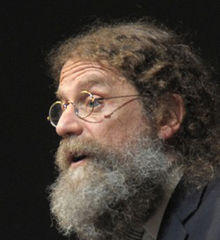
Robert M. Sapolsky
Robert M. Sapolsky

Robert M. Sapolsky is a renowned neuroendocrinologist known for his research on stress, neurobiology, and evolutionary psychology. His work has revealed how stress affects the brain and body, and how these effects relate to human behavior and health. more

You May Also Like

“But what is identity really? What is it to ‘belong’ when we cast ourselves in the mold of a social group? I ask this, in spite of my implicit allegiance to one; yet, it is a worthwhile question. I mean, really, what does it even mean to share a commonality of blood or language or religion or heritage or context or economy or trade—and what value does this sharing of common traits, values and experiences truly have when there exists already a larger model of connection and commonality enveloping these disparate identities whole...? Do we pout at our inadequacies in the face of a “something” that is slightly more heterogeneous in its model of belonging? Sometimes, we simply must let go and chalk up all these movements to an inveterate (and arbitrary) sense of pride.”

“Bolshevik intellectuals did not confine their reading to Marxist works. They knew Russian and European literature and philosophy and kept up with current trends in art and thoughts. Aspects of Nietzsche’s thought were either surprisingly compatible with Marxism or treated issues that Marx and Engels had neglected. Nietzsche sensitized Bolsheviks committed to reason and science to the importance of the nonrational aspects of the human psyche and to the psychpolitical utility of symbol, myth, and cult. His visions of “great politics” (grosse Politik) colored their imaginations. Politik, like the Russian word politika, means both “politics” and “policy”; grosse has also been translated as “grand” or “large scale.” The Soviet obsession with creating a new culture stemmed primarily from Nietzsche, Wagner, and their Russian popularizers. Marx and Engels never developed a detailed theory of culture because they considered it part of the superstructure that would change to follow changes in the economic base.”

“The entirety of Marxism from top to bottom was established by means of the dialectical materialist method. In literally any work of Marx and Engels it is therefore both possible and necessary to study the logic of their thinking and the theory of knowledge which they consciously employed – dialectics. This must be studied not only in their writings, but in the real logic of the political struggle which they conducted throughout their entire lives. For dialectics is the logic not only of research, and not only of the unity of scientific works; it is also a logic of real causes which comes to life and enters into battle, finding realisation in whatever are the truly real causes changing the face of the surrounding world.”

“Marx, Engels, and Lenin have carried on the tradition of rational and non-mystical approach to all human problems; this is the tradition of the best Greek philosophers and the founders of modern science. Careful analysis; separation of factors; the following of causes into their effects; reliance on experiments; all are taken over into Marxism and provide it with a hard scientific core. There is nowhere any pandering to special intuitions or spiritual experiences.”