Quotessence
Home / Quotes / Quote by John Milton

Quote by John Milton

“but what if God have seen, And death ensue? then I shall be no more, And Adam wedded to another Eve, Shall live with her enjoying, I extinct; A death to think. Confirmed then I resolve, Adam shall share with me in bliss or woe: So dear I love him, that with him all deaths I could endure, without him live no life.”

Quote by John Milton

Work

Paradise lost

Written by John Milton, Paradise Lost is a profound narrative that delves into the origins of evil and the struggle between good and evil. The poem narrates the story of the fall of Adam and Eve, their expulsion from Eden, and the subsequent war in heaven. It is renowned for its complex characters, rich symbolism, and profound theological and philosophical themes. more

Author

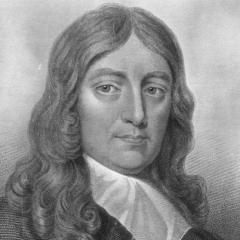
John Milton
John Milton

John Milton, born on December 9, 1608, in London, and died on November 8, 1674, was a renowned English poet and scholar. He is best known for his epic poem 'Paradise Lost,' which has had a profound impact on world literature. more

You May Also Like

“In our love for our church and our holy regard for those who lead us in the things of God, we forget the nature of humanity. We are not surprised by the evil pressing in from without, but we are blind to the potential for wickedness that slumbers in our own souls. We forget that humans are a combination of greatness and grief, of righteous might and disgusting sin. In our sentimentality about our church and those we love in it, we forget to stand guard against the natural failings of humanity. We turn off our deflector shields and cast aside our filters and begin to ignore the signals our inner radar may be sending.”

“When church becomes for us an anointed have, when the grace is flowing and all is well we become sentimental...we remake people into what we need them to be. We are not wise in our love, prudent in our commitments, knowing in our fellowship. And so the evil comes and we are first amazed and then destroyed and then knocked off our axis as if never to return.”

“Temptation Versus Sin I think the other thing we need to remember is there is a distinction between temptation and sin. We see that in the Bible in the Lord’s prayer. We need to be delivered from our temptations, but we need to be forgiven for our sins. James reminds us that temptation gives birth to sin (James 1:15). It’s not itself sin. So the two are not the same thing. When we’re tempted, we need to flee temptation and to stand faithfully underneath it. I take it that it’s possible, therefore, to be tempted without sinning. We’re not told that as we grow as Christians temptations will just disappear from life. We are promised that God will enable us to stand under temptation. I want to say that the presence of temptation is not itself a sin. James tells me that when I experience temptation, I shouldn’t blame God. I shouldn’t say, “Well that’s God’s fault that I’m tempted in this way.” I need to recognize the ways in which my own temptations are a reflection my fallen nature. They come from my own desires. But I don’t think it’s right to say that having the capacity to be tempted is itself a sin. It’s a sign of our fallenness, but I want to repent of the ways I sinfully respond to temptation. I want to flee temptation itself. Otherwise, you’re saying to somebody, “Even if you’re not sinning, you’re still sinning, just because you’ve got the capacity to be tempted in a certain way.”