Quotessence
Home / Quotes / Quote by Paul Rusesabagina

Quote by Paul Rusesabagina

“It always bothers me when I hear Rwanda's genocide described as a product of "ancient tribal hatreds." I think this is an easy way for Westerners to dismiss the whole thing as a regrettable but pointless bloodbath that happens to primitive brown people.”

Quote by Paul Rusesabagina

Work

An Ordinary Man: An Autobiography

This book is an introspective look into the life of an average man, detailing his journey through various life stages, personal triumphs, and challenges. The narrative explores the mundane and extraordinary moments that shape an individual's existence, providing a unique perspective on the human condition. more

Author
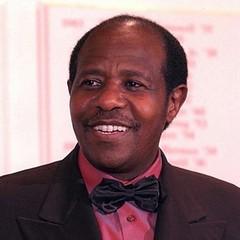
Paul Rusesabagina
Paul Rusesabagina

Paul Rusesabagina, born on June 15, 1954, is a hero who saved over 1,200 Tutsi and Hutu civilians during the Rwandan genocide. He was a hotel manager and became famous for his bravery in protecting refugees during the 1994 genocide. more

You May Also Like

“The UN lacked the ability to act without the support of its more powerful members, notably the United States. The American government wanted to avoid a repetition of its unsuccessful intervention in Somalia, in which thirty American troops were killed. President Clinton issued a directive on UN military conditions. The operations would also have to be directly relevant to American interests. These conditions excluded American support for UN intervention to stop the genocide [in Rwanda].”

“Rwanda’s Muslim community is an example of a group (a full community rather than isolated individuals) that resisted the appeal of dangerous speech and other pressures to participate in the genocide. The Muslim community, which had both Hutu and Tutsi members, not only refused to participate in the genocide but actively opposed it. Its actions during the genocide included rescuing, hiding, and taking care of Muslim and non-Muslim Tutsis, and providing safe haven in mosques. Muslims also rejected commands to kill or reveal Tutsis hidden in their communities, on several occasions going so far as to fight back and be killed themselves.”

“This hypothesis, believed by many Western scholars at the time, held that there were two races present in Africa: the Hamitic race and the Negroid race. The Hamitic race was thought to be a superior race of people who originated in northern Africa. British historian C. G. Seligman went so far as to claim that all significant discoveries and advancements in African history, including those of the Ancient Egyptians, were achieved by Hamites. He argued that Hamites migrated into central Africa, bringing more sophisticated customs, languages, and technologies with them. Hamites were believed by Westerners to be more closely related to white people. Tutsis were believed to be descendants of Hamitic people because they had more "European" features. Hutus were believed to be Negroid. Tutsis were therefore allowed better educations and jobs. Ethnic identity cards were introduced to ensure tribal division. Many have argued that this division was at the root of the Rwandan genocide of 1994, during which members of the Hutu majority murdered as many as eight hundred thousand Tutsi people.”