Quotessence
Home / Quotes / Quote by Matt Haig

Quote by Matt Haig

Work

The Midnight Library

Browse quotes and source details for this work. more

Author

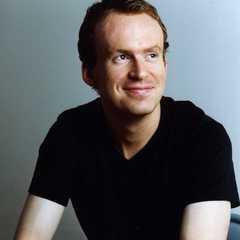
Matt Haig
Matt Haig

Matt Haig is a British novelist born in 1975. His works are known for their humor and profound emotional insight, enjoying great popularity among readers. Haig's writing spans a variety of genres, including science fiction, fantasy, and realism. more
You May Also Like

“Did you ever get pissed off with me? You know, for backing out of the band?' 'That was years ago, sis. Lots of water under the bridge since then.' 'You wanted to be a rock star, though.' 'He still is a rock star,' said Ewan, laughing. 'But he's all mine.' 'I always feel like I let you down, Joe.' 'Well, don't...But I feel like I let you down too. Because I was such an idiot...I was horrid to you for a little while.' These words felt like a tonic she had been waiting years to hear. 'Don't worry about it,' she managed.”

“This sort-of déjà-vu happened increasingly. Yes, of course there were the occasional slip-ups she made — like 'forgetting' Ash had asthma (which he tried to keep under control via running): 'How long have you had it?' 'Since I was seven.' 'Oh yes, of course. I thought you'd said eczema.' 'Nora, are you okay?' 'Yes. Um, fine. It's just I had some wine with Lara at lunch and I feel a bit spaced out.' But slowly, these slip-ups became less frequent. It was as though each day was a piece fitting into a puzzle and, with each piece added, it became easier to know what the absent pieces were going to look like. Whereas in every other life she had been continually grasping for clues and feeling like she was acting, in this one she increasingly found that the more she relaxed into it, the more things came to her.”

“Nora felt something inside her all at once. A kind of fear, as real as the fear she had felt on the Arctic skerry, face to face with the polar bear. A fear of what she was feeling. Love. You could eat in the finest restaurants, you could partake in every sensual pleasure, you could sing on stage in São Paulo to twenty thousand people, you could soak up whole thunderstorms of applause, you could travel to the ends of the Earth, you could be followed by millions on the internet, you could win Olympic medals, but this was all meaningless without love. And when she thought of her root life, the fundamental problem with it, the thing that had left her vulnerable, really, was the absence of love. Even her brother hadn't wanted her in that life. There had been no one, once Volts had died. She had loved no one, and no one had loved her back. She had been empty, her life had been empty, walking around, faking some kind of human normality like a sentient mannequin of despair. Just the bare bones of getting through. Yet there, right there in that garden of Cambridge, under that dull grey sky, she felt the power of it, the terrifying power of caring deeply and being cared for deeply. Okay, her parents were still dead in this life but here there was Molly, there was Ash, there was Joe. There was a net of love to break her fall. And yet she sensed deep down that it would all come to an end, soon. She sensed that, for all the perfection here, there was something wrong amid the rightness. And the thing that was wrong couldn't be fixed because the flaw was the righteousness itself. Everything was right, and yet she hadn't earned this. She had joined the movie halfway. She had taken the book from the library, but truthfully, she didn't own it. She was watching her life as if from behind a window. She was, she began to feel, a fraud. She wanted this to be her life. As in her real life. And it wasn't and she just wished she could forget that fact. She really did.”

“She stared at her own window. She thought of herself in her root life, hovering between life and death in her bedroom — equidistant, as it were. And, for the first time, Nora worried about herself as if she was actually someone else. Not just another version of her, but a different actual person. As though finally, through all the experiences of life she now had, she had become someone who pitied her former self. Not in self-pity, because she was a different self now.”