Quotessence
Home / Authors / Matt Haig
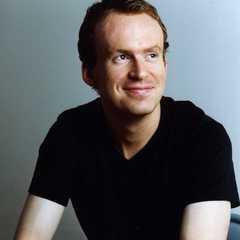
Matt Haig

Matt Haig Quotes

Novelist

Filter quotes by topic

Famous Matt Haig Quotes

“In another life Nora was a sea of emotion. She felt everything deeply and directly. Every joy and every sorrow. A single moment could contain both intense pleasure and intense pain, as if both were dependent on each other, like a pendulum in motion. A simple walk outside and she could feel a heavy sadness simply because the sun had slipped behind a cloud. Yet, conversely, meeting a dog who was clearly grateful for her attention caused her to feel so exultant that she felt she could melt into the pavement with sheer bliss. In that life she had a book of Emily Dickinson poems beside her bed and she had a playlist called ‘Extreme States of Euphoria’ and another one called ‘The Glue to Fix Me When I Am Broken’.”

“But there was a sense of something tipping out of balance. The times seemed out of joint. There was too much decadence. Too much intensity. Too much change. Too much happiness juxtaposed with too much misery. Too much wealth next to too much poverty. The world was becoming faster and louder, and the social systems were becoming as chaotic and fragmented as jazz scores. So there was a craving, in some places, for simplicity, for order, for scapegoats and for bully-boy leaders, for nations to become like religions or cults. It happened every now and then. It seemed, in the 1930s, that the whole course of humanity was at stake. As it very often does today. Too many people wanted to find an easy answer to complicated questions. It was a dangerous time to be human. To feel or to think or to care.”

“She realised that she hadn’t tried to end her life because she was miserable, but because she had managed to convince herself that there was no way out of her misery. That, she supposed, was the basis of depression as well as the difference between fear and despair. Fear was when you wandered into a cellar and worried that the door would close shut. Despair was when the door closed and locked behind you.”

“It was as though she had reached some state of acceptance about life–that if there was a bad experience, there wouldn’t only be bad experiences. She realized that she hadn’t tried to end her life because she was miserable, but because she had managed to convince herself that there was no way out of her misery. That, she supposed, was the basis of depression as well as the difference between fear and despair. Fear was when you wandered into a cellar and worried that the door would close shut. Despair was when the door closed and locked behind you.”

“it would have made things a lot easier if we understood there was no way of living that can immunize you against sadness. And that sadness is intrinsically part of the fabric of happiness. You can’t have one without the other. Of course, they come in different degrees and quantities. But there is no life where you can be in a state of sheer happiness for ever. And imagining there is just breeds more unhappiness in the life you’re in.”

“She might not have felt everything she had felt in those lives, but she had the capability. She might have missed those particular opportunities that led her to become an Olympic swimmer, or traveller, or a vineyard owner, or a rock star, or a planet-saving glaciologist, or a Cambridge graduate, or a mother, or million other things, but she was still in in some way all of those people. They were all her. She could of been all those amazing people, and that wasn't depressing, as she had thought. Not at all. It was inspiring. Because now she saw the kinds of things she could do when she put herself to work.”

“There was death. Violent, oblivious death, in bear form, staring at her with its black eyes. And she knew then, more than she’d known anything, that she wasn’t ready to die. This knowledge grew bigger than fear itself as she stood there, face to face with a polar bear, itself hungry and desperate to exist, and banged the ladle against the saucepan. Harder. A fast, staccato bang bang bang. I’m. Not. Scared.”

“Marion does not talk much. But when she does talk she swears a lot more. There is a joy she takes in swearing which I suspect she inherited from her aunt Grace. She likes the word 'motherfucker' in particular (not that this particular one was around in her aunt's day). Everything is a motherfucker. For instance, the TV is a motherfucker. (There is 'never anything on the motherfucker'.) Her shoes are motherfuckers. The American president is a motherfucker. Weaving yarn through a loom is a motherfucker. Bertrand Russell's History of Western Philosophy is a motherfucker.”

“She said being human is being a young child on Christmas Day who receives an absolutely magnificent castle. And there is a perfect photograph of this castle on the box and you want more than anything to play with the castle and the knights and the princesses because it looks like such a perfectly human world, but the only problem is that the castle isn’t built. It’s in tiny intricate pieces, and although there’s a book of instructions you don’t understand it. And nor can your parents or Aunt Sylvie. So you are just left, crying at the ideal castle on the box which no one would ever be able to build”