Quotessence
Home / Authors / Matt Haig
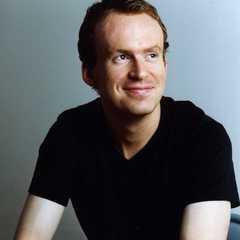
Matt Haig

Matt Haig Quotes

Novelist

Filter quotes by topic

Famous Matt Haig Quotes

“The rook is my favorite piece.’ she said. ‘It’s the one you think you don’t have to watch out for. It is straightforward. You keep your eyes on the queen, and the knight and the bishop, because they are the sneaky ones. But is the rook that often gets you. The straightforward is never quite what it seems.”

“My mother was, in the tradition of parents, quite a complicated and contradictory human being. Moralistic but a devout lover of pleasure (food, music, the aesthetics of nature). Deeply religious but seemingly as comforted by singing a secular chanson as by prayer. A lover of the natural world who was visibly anxious every time she left the castle. Fragile, but also though and stubborn. I never knew how many of her oddities had sprung from grief and how many from her own inherent nature. "There is not one blade of grass, there is no colour in this world that is not intended to make us rejoice," my mother told me once, shortly after arriving in England.”

“A wave can kill you. Or you can ride it. It's sometimes more dangerous to shy away. You can't live your life in fear. You have to be prepared to get on your board and stand on your feet. If you are in the barrel of a wave you have to ignore the fear. You have to be in that moment. You have to carve on through. You get scared, and the next thing you know you are off your board and smashing your head on a rock. I'm never going to live in fear.”

“I loved someone once. A woman. I loved her madly. Do you understand? We were together, in secret, for nearly twenty years. And we were told we couldn't talk about that love… because it was dangerous. It was dangerous to love […] There comes a time when the only way to start living is to tell the truth. To be who you really are, even if it is dangerous.”

“Maybe that’s what all lives were, though. Maybe even the most seemingly perfectly intense or worthwhile lives ultimately felt the same. Acres of disappointment and monotony and hurts and rivalries but with flashes of wonder and beauty. Maybe that was the only meaning that mattered. To be the world, witnessing itself. Maybe it wasn’t the lack of achievements that had made her and her brother’s parents unhappy, maybe it was the expectation to achieve in the first place.”

“Maybe that's what all lives were, though. Maybe even the most seemingly perfectly intense or worthwhile lives ultimately felt the same. Acres of disappointment and monotony and hurts and rivalries but with flashes of wonder and beauty. Maybe that was the only meaning that mattered. To be the world, witnessing itself. Maybe it wasn't the lack of achievements that had made her and her brother's parents unhappy, maybe it was the expectation to achieve in the first place. She had no idea about any of it, really.”

“Humans, as a rule, don't like mad people unless they are good at painting, and only then once they are dead. But the definition of mad, on Earth, seems to be very unclear and inconsistent. What is perfectly sane in one era turns out to be insane in another. The earliest humans walked around naked with no problem. Certain humans, in humid rainforests mainly, still do so. So, we must conclude that madness is sometimes a question of time, and sometimes of postcode. Basically, the key rule is, if you want to appear sane on Earth you have to be in the right place, wearing the right clothes, saying the right things, and only stepping on the right kind of grass.”

“I worry that I upset people without meaning to. I worry that I don't check my privilege enough. I worry about people being imprisoned for crimes they didn't do. I worry about human rights abuses. I worry about prejudice and politics and pollution and the world my children, and their entire generation, are inheriting from us. I worry about all of the species going extinct because of humans. I worry about my carbon footprint. I worry about all of the pain in the world that I am not actively able to stop. I worry about how much I'm wrapped up in myself, which makes me even more wrapped up in myself.”

“I didn't totally fit in. I kind of disintegrated around people and became what they wanted me to be. But paradoxically, I felt an intensity inside me all the time. I didn't know what it was, but it kept building, like water behind a dam. Later, when I was properly depressed and anxious, I saw the illness as an accumulation of all that thwarted intensity. A kind of breaking through. As though, if you find it hard enough to let your self be free, your self breaks in, flooding your mind in an attempt to drown all those failed half-versions of you.”

“Beauty-be not caused said Emily Dickinson. 'It is." In one way she was wrong. The scattering of light over a long distance creates a sunset. The crashing of ocean waves on a beach is created by tides which are themselves the result of gravitational forces exerted by the sun and the moon and the rotation of the Earth. Those are causes. The mystery lies in how those things become beautiful. And they wouldn't have been beautiful once, at least not to my eyes. To experience beauty on Earth you needed to experience pain and to know mortality. That is why so much that is beautiful on this planet has to do with time passing and the Earth turning. Which might also explain why to look at such natural beauty was to also feel sadness and a craving for a life unlived.”

“When he wrote Meditations, Marcus Aurelius was the most powerful man in the world. He had, quite literally, a whole empire at his disposal. Cities, armies, palaces. All were his. He spent over a decade, from the year 161 to 180, as Roman emperor during the 'Golden Age'. And yet he resisted seeking any contentment in his status and power, in favour of simplicity, consultation and a cosmic perspective. He believed watching the stars was important and talks about Pythagoras - the early Greek philosopher and founder of Pythagoreanism - as his influence here. The Pythagoreans saw gazing up at the sky not just as a pleasant thing to do, but an insight into a divine order. Because stars are all separate, but all together in an order. For the Stoics, looking at them was looking at unveiled glimpses of divinity - and also fragments of Nature. It is not just the sky or the stars, then, that are important, but what we think when we look at them. Our connection to the shifting world around and above us. 'The universe is change', wrote Marcus Aurelius. 'Our life is what our thoughts make it.' Even a man in charge of an empire could look at the stars and feel happily small in the grand universal order of things. The sky doesn't start above us. There is no starting point for sky. We live in the sky.”

“It is good to be weird. It is good to be eccentric. It is good to be separate from the crowd. The philosopher John Stuart Mill thought it was almost a civic duty to be eccentric, to break the tyranny of conformity and custom. But even if we don’t feel outwardly eccentric, we all have eccentric parts. Thoughts that crop up on the peripheries of our thinking. Random sparks we can set alight. Thoughts that offer the other point of view or the other side of a political argument. Thoughts that don’t quite fit in with our other thoughts. Tastes that go against our other tastes. And as we grow older it is good to keep tending to those unconventional parts of ourselves—the thoughts that buck the trend—because these are the parts that will keep us new and capable of surprise. They will stop us becoming a cover version of ourselves. They will help us become new songs.”