Quotessence
Home / Quotes / Quote by Aristotle

Quote by Aristotle

“Inequality is everywhere at the bottom of faction, for in general faction arises from men's striving for what is equal.”
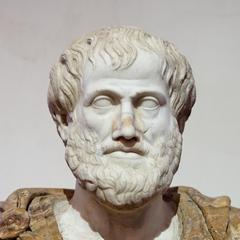
Quote by Aristotle

Work

Politics

This book delves into the fundamental principles and practices of politics, examining various political systems and ideologies across different historical periods and cultures. more

Author

Aristotle
Aristotle

Aristotle, a renowned Greek philosopher, is one of the founders of Western philosophy. His thoughts covered a wide range of fields, including ethics, logic, politics, and had a profound impact on the world. more

You May Also Like

“He said, moreover, "Teach those who are ignorant as many things as possible; society is culpable, in that it does not afford instruction gratis; it is responsible for the night which it produces. This soul is full of shadow; sin is therein committed. The guilty one is not the person who has committed the sin, but the person who has created the shadow." It will be perceived that he had a peculiar manner of his own of judging things: I suspect that he obtained it from the Gospel.”

“The great hatred of capitalism in the hearts of the oppressed, ancient and modern, I think, stems not merely from the ensuing vast inequality in wealth, and the often unfair and arbitrary nature of who profits and who suffers, but from the silent acknowledgement that under a free market economy the many victims of the greed of the few are still better off than those under the utopian socialism of the well-intended. It is a hard thing for the poor to acknowledge benefits from their rich moral inferiors who never so intended it. (p.272)”

“At its most basic, the logic of 'meritocracy' is ironclad: putting the most qualified, best equipped people into the positions of greates responsibility and import...But my central contention is that our near-religious fidelity to the meritocratic model comes with huge costs. We overestimate the advantages of meritocracy and underappreciate its costs, because we don't think hard enough about the consequences of the inequality it produces. As Americans, we take it as a given that unequal levels of achievement are natural, even desirable. Sociologist Jermole Karabel, whose work looks at elite formation, once said he 'didnt think any advanced democracy is as obsessed with equality of opportunity or as relatively unconcerned with equality of condition' as the United States. This is our central problem. And my proposed solution for correcting the excesses of our extreme version of meritocracy is quite simple: make America more equal”

“In some circumstances, a focus on extrinsic rewards (money) can actually diminish effort. Most (or at least many) teachers enter their profession not because of the money but because of their love for children and their dedication to teaching. The best teachers could have earned far higher incomes if they had gone to banking. It is almost insulting to assume that they are not doing what they can to help their students learn, and that by paying them an extra $500 or $1,500, they would exert greater effort. Indeed, incentive pay can be corrosive: it reminds teachers of how bad their pay is, and those who are led thereby to focus on money may be induced to find a better paying job, leaving behind only those for whom teaching is the only alternative. (Of course, if teachers perceive themselves to be badly paid, that will undermine morale, and that will have adverse incentive effects)”

“The first commendment of hte post 1970s meritocracy can be sumed up as follows: "Thou shall provide equality of opportunity to all, regardless of race, gender, or sexual oritentation, but worry not about equality of outcomes." But what we've seen time and time again is that the two aren't so neatly separated. If you don't concern yourself at all with equality fo outcomes, you will, over time, produce a system with horrendous inequality of opportunity. This is the paradox of meritocracy: It can only truly come to flower in a society that starts out with a relatively high degree of equality. So if you want meritocracy, work for equality. Because it is only in a society which values equality of actual outcomes, one that promotes the commonweal and social solidarity, that equal opportunity and earned mobility can flourish.”

“The processes of corporate power do not work in isolation. The economic and legal mechanisms that allow the privatization of the commonwealth, externalization of costs, predatory economic practices, political influence-buying, manipulation of regulation and deregulation, control of the media, propaganda and advertising in schools, and the use of police and military forces to protect the property of the wealthy-all of these work synergistically to weave a complex web of power. Activists have dedicated lifetimes of necessary work to deal with the results of corporate power, by trying to mitigate the results of power: an ever-increasing disparity in wealth and power and continual economic, political, environmental, and human rights crises. For social justice campaigns to be strategic, it is also necessary to examine how privatization, externalization, monopoly, and other corporate power processes have been institutionalized. This institutionalization is exemplified in the structural adjustment programs of the World Bank and International Monetary Fund, and in recent "free" trade agreements which have culminated in the creation of the World Trade Organization. An understanding of such institutions provides a necessary tool for achieving the long-term goals of environmental sustainability and social justice.”