Quotessence
Home / Quotes / Quote by William C. Davis

Quote by William C. Davis

“Grant was forty-two and Lee fifty-seven, Grant at the peak of health and energy, while Lee feared his weakening body and lagging faculties. Each was defending his notion of home. Grant by now was the most popular man in the Union, arguably more so even than Lincoln. Lee was easily the most important man in the Confederacy, his popularity and influence, had he chosen to use it, far outstripping Davis’s. Unquestionably, they were at this moment the preeminent military figures in America, and arguably the world.”

Quote by William C. Davis

Work

Author

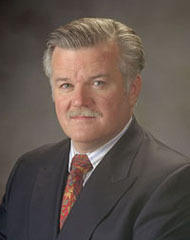
William C. Davis
William C. Davis

William C. Davis is an American historian renowned for his research on the American Civil War and slavery. His works delve into significant events and figures in American history, providing the public with a rich historical perspective. more

You May Also Like

“He could do little. Brandy might help, he thought, but when he poured some into the hurt man’s mouth it ran back out again. Presently a colonel, Johnston’s chief of staff, came hurrying into the ravine. But he could do nothing either. He knelt down facing the general. “Johnston, do you know me? Johnston, do you know me?” he kept asking, over and over, nudging the general’s shoulder as he spoke. But Johnston did not know him. Johnston was dead.”

“Robert E. Lee had done his duty and, however heartbroken, was prepared to do his duty still. Having devoted himself to winning the war, until the bitter end, he was now beginning the transition to an equally fervent commitment, reuniting the two halves of the divided country. As he slowly rode back to his camp, some fifteen minutes away, advance soldiers began to shout, “General, are we surrendered?” Lee struggled for words to express his sense of despair and came up short; he was speechless. But soon, two solid walls of men began to line the road, and when he came into view, they began to cheer wildly. At the sound and the sight, tears started to roll in the general’s eyes, and his men, too, began to weep.”

“Nashville was a prize. Johnston had left in a hurry, abandoning huge quantities of supplies — half a million pounds of bacon, much bread and flour, and bales of new tents, the latter greatly welcomed by the Federals, who had left their own tents far behind them. The Federals were having their first experience in occupying a Confederate capital, and they found numerous timid citizens who were ready to turn their coats and cuddle up to the invaders: dignified gentlemen who called on generals to explain that they personally had always been Union men, to identify leading Rebels in the community, to tell where Confederate supplies had been hidden, and in general to make themselves useful.”

“There is no other legend quite like the legend of the Confederate fighting man. He reached the end of his haunted road long ago. He fought for a star-crossed cause and in the end he was beaten, but as he carried his slashed red battle flag into the dusky twilight of the Lost Cause he marched straight into a legend that will live as long as the American people care to remember anything about the American past. - Bruce Catton”

“There is no other legend quite like the legend of the Confederate fighting man. He reached the end of his haunted road long ago. He fought for a star-crossed cause and in the end he was beaten, but as he carried his slashed red battle flag into the dusky twilight of the Lost Cause he marched straight into a legend that will live as long as the American people care to remember anything about the American past.”

“Before they came in Lee had a couple of adventures. He first clashed with a sergeant of a Mississippi regiment who wandered over the wet field. Lee called out sharply: "What are you doing here, sir, away from your command?" "That's none of your business," the ragged soldier said. "You are a straggler, sire, and deserve the severest punishment." The sergeant shouted in rage, "It is a lie, sir. I only left my regiment a few minutes ago to hunt me a pair of shoes. I went through all the fight yesterday, and that's more than you can say; for where were you yesterday when General Stuart wanted your cavalry to charge the Yankees after we put 'em to running? You were lying back in the pine thickets and couldn't be found; but today, when there's no danger, you come out and charge other men with straggling." Lee laughed and rode off. Behind him an officer baited the sergeant, who thought he had been talking with a "cowardly Virginia cavalryman". "No, sir, that was General Lee." "Ho-o-what? General Lee, you say?" "Yes." "Scissors to grind, I'm a goner." The sergeant tore out of sight along the muddy road.”

“While President Jefferson Davis in Richmond and his own soldiers continued to support him with unwavering trust, Gen. Lee wrestled with his own demons, including his ill-fated invasion of Pennsylvania, which had been successful through the first day of fighting at Gettysburg. Other more tangible challenges included his ongoing concern about the well-being of his men due to a lack of adequate supplies, and by his own lingering health problems. His “violent back pains” were probably the result of the chronic heart problems that would kill him in 1870.10”

“by spring 1862 it became universal throughout Confederate regiments for the soldiers to elect their leaders from colonel down to sergeants, the very imposition of military democracy that would lead some to bemoan the demagoguery and wire-pulling with the men in order to seek election.”