Quotessence
Home / Quotes / Quote by Carlos P. Romulo

Quote by Carlos P. Romulo

Work

I Walked With Heroes

Browse quotes and source details for this work. more
Author

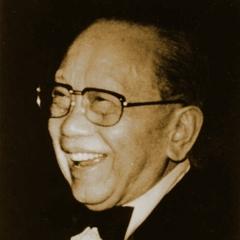
Carlos P. Romulo
Carlos P. Romulo

Carlos P. Romulo was a prominent Filipino statesman and diplomat, serving as the Resident Commissioner of the Philippines. Born on January 14, 1899, and passing away on December 15, 1985, he had a significant impact on international diplomacy, particularly during the early years of the United Nations. more

You May Also Like

“I like to think of myself as a reasonable man. But I have buried too many friends in the too-recent past, and I have seen too many lies go unquestioned, and too many questions go unasked. There is a time when even reasonable men must begin to take unreasonable actions. To do anything else is to be less than human. And to those who would choose the safety of inaction over the danger of taking a stand, I have this to say: You bloody cowards. May you have the world that you deserve.”

“... but in the depths of their hearts, in that true and ultimate depth which is revealed to no one, there remained the memory of what had taken place and the consciousness that was has once been can be again; there remained too hope, a seneless hope, that great asset of the downtrodden. For those who rule and must oppress in order to rule must work according to reason; and if, carried away by their passions or driven by an adversary, they go beyond the limits of reasonable action, they start down the slippery slope and thereby reveal the commencement of their own downfall. Whereas those who are downtrodden and exploited make equal use of their reason and unreason for they are but two different kinds of arms in the continual struggle, now underground, now open, against the oppressor.”

“Truth is not a thing Or a concept. It is as multidimensional In its meaning As it is in its reflection. It is both invisible And visible. It carries tons of weight, But can be carried. It is understood first through the spirit Before science, And felt in the heart, Before the mind. Truth is not always heard by reason, Because reason sometimes Ignores Truth. Always listen to your conscience. Your conscience is your heart And reason is your mind. Your mind is simply there to reason With your heart. But remember, Truth is in your heart, And only through your heart Can you connect to the light of God. He who is not motivated by his heart Will not see Truth, And he who thinks only with his mind Will be blind to Truth. He who does not think With his conscience, Does not stand by God, For the language of light Can only be decoded by the heart. He who reads and recites words of God Also does not stand by God – If he merely understands Words with his mind But not his heart. Truth is black and white, And the entire spectrum Of colors in-between. It can have many parts, But has a solid foundation. Truth lacks perfection, For it is the reflection of all, Yet its reflection as a whole, Is more beautiful Than the accumulated flaws Of the small. Truth is the only brand Worth breathing And believing. So stand for truth In everything you do, And only then Does your life have Meaning.”

“What is most remarkable about the philosophy of Kant, in my opinion, is the wide range of topics on which his thoughts repay careful study. In so many areas -- not only in metaphysics but also in natural science, history, morality, and critique of taste -- he seems to have gone to the root of the matter, and at least raised for us the fundamental issues, whether or not we decide in the end that what he said about them is correct. In his brief, five-page essay on the question "What is Enlightenment?" for example, he locates the essence of enlightenment not in learning or the cultivation of our intellectual powers but in the courage and resolve to think for oneself, to emancipate oneself from tradition, prejudice, and every form of authority that offers us the comfort and security of letting someone else do our thinking for us. Kant's essay enables us to see that the issues raised by the challenge of the Enlightenment are still just as much with us as they were in the eighteenth century.”

“Could error arise from a true demonstration, and falsehood proceed from duly verified authority? In no domain could this easily happen, and when dealing with religious faith it could not happen at all. To say that religious faith is legitimate as a means of knowledge is to say that it is divine; for it has no value for those who proclaim it except what it derives from this transcendent origin. To say, on the other hand, that the use of the reason is legitimate and necessary, is to take the same thing as understood; for reason has no authority except as far as it represents the eternal order, that is to say, God once more. How could God be divided against Himself, teaching by revelation what He contradicts by the intelligence, and setting up in opposition to each other as two manifestly hostile things on the one side the Gospel, on the other the book of nature and of humanity, when these volumes, which we want to distinguish, are really the three volumes of one work? If the Gospel be properly understood—the living Gospel, I mean, such as the Church offers it—it cannot contradict nature, nor man, nor, consequently, that science which expresses them both. If science is in its own domain and operates according to its law, it cannot contradict the Gospel.”