“I suppose some things seem obscure, Mister Brown, but really, they're quite obvious, aren't they?' said Mr. Forbes. 'Once they've been pointed out, of course. Either by genius before the fact, or, as is more often the case, after the fact by disaster. Don't you think so?...For instance, Mr. Brown, here's some after-the-fact wisdom, if you like. Taken from the Italian campaign. Taught by disaster.' The smaller force, he said, had of necessity always to be made of men who, though they believed many things, must believe but two. Number one, each soldier must believe that he is engaged in a struggle in which he and his comrades are morally right and their opposition is morally wrong. No middle way. No room to negotiate a compromise. It couldn't be a simple dispute over land. Basic principles, not mere borders, must be at stake. And number two, he must believe that he is fighting for his own life and for the lives of his loved ones. So that the only imaginable alternative to his participating in this dreadful war is death for him and his loved ones. No going home for a season to harvest the olives and the grapes.”
Quote by Russell Banks
Book:Cloudsplitter
Work
Cloudsplitter
Browse quotes and source details for this work. more
Author
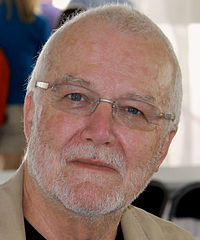
Russell Banks
Russell Banks is an American writer known for his novels that often delve into social and political issues. His works are recognized for their profound character development and complex narrative structures. more
You May Also Like
“[describing 'the prime minister' i.e Goering] He loved war as a child loves Christmas”
Source: Mephisto
Source: Penguin Island
Source: A Call to Home
“An army never expects to lose a war to a flightless bird – or any bird, really.”
Source: Nature's Last Dance: Tales of Wonder in an Age of Extinction
Source: Fahrenheit 451
“Peace is mutual. War is unilateral. When war comes, it does so without your blessing or your vote.”
“War is the currency of political power.”
Source: Iftar-e Insaniyat: The First Supper
“Decide if a poem is a question or a declaration, a meditation or an outcry.”
Source: Poetry as Insurgent Art
“Our wars in Iraq, in Bosnia and in Kosovo contained a sinister pattern, a ‘normalisation’ of war.”
Source: Night of Power: The Betrayal of the Middle East