“Safie related that her mother was a Christian Arab, seized and made a slave by the Turks; recommended by her beauty, she had won the heart of the father of Safie, who married her. The young girl spoke in high and enthusiastic terms of her mother, who, born in freedom, spurned the bondage to which she was now reduced. She instructed her daughter in the tenets of her religion and taught her to aspire to higher powers of intellect and an independence of spirit forbidden to the female followers of Mahomet. This lady died; but her lessons were indelibly impressed on the mind of Safie, who sickened at the prospect of again returning to Asia and being immured within the walls of a harem, allowed only to occupy herself with infantile amusements, ill-suited to the temper of her soul, now accustomed to grand ideas and a noble emulation of virtue. The prospect of marrying a Christian and remaining in a country where women were allowed to take a rank in society was enchanting to her.”
Quote by Mary Wollstonecraft Shelley
Book:Frankenstein
Work
Frankenstein
Written by Mary Shelley, Frankenstein tells the story of a young scientist who creates a creature in the likeness of a human but is ultimately rejected by society. The novel delves into the consequences of scientific ambition and the moral implications of life creation. more
Author
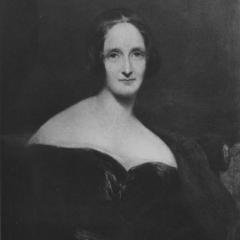
Mary Wollstonecraft Shelley
Mary Wollstonecraft Shelley was an English novelist best known for her famous work, 'Frankenstein'. Born on August 30, 1797, and passing away on February 1, 1851, she was an early female writer whose works explored themes such as women's rights, social inequalities, and scientific ethics. more
You May Also Like
“it is still more permitted for women to be mediocre than for them to be fat”
Source: Natural Beauty
Source: Eating Disorders: A Contemporary Introduction
Source: Eating Disorders: A Contemporary Introduction
Source: They Were Her Property: White Women as Slave Owners in the American South
Source: Watch Me Die
“The task of modern man is not to find his inner self, but to create himself.”
Source: Change Your Mind: 57 Ways to Unlock Your Creative Self
Source: Seven Women: And the Secret of Their Greatness - Library Edition
Source: Seven Women: And the Secret of Their Greatness
Source: Communion: The Female Search for Love