Quotessence
Home / Quotes / Quote by Richard Rohr

Quote by Richard Rohr

Work

Falling Upward: A Spirituality for the Two Halves of Life

This book delves into the spiritual journey of individuals as they navigate the complexities and transformations that occur during the latter part of life. more

Author
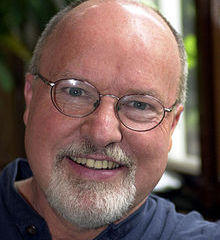
Richard Rohr
Richard Rohr

Richard Rohr is an American theologian, writer, and priest, born in 1943. He is known for his profound insights into Christian spirituality and his critical thinking about contemporary society. more

You May Also Like

“You know, in my opinion, being ridiculous is sometimes even a good thing, and better than that: we can forgive one another more quickly, and acquire humility more quickly; after all, we can't understand everything at once, we can't begin directly from perfection! In order to achieve perfection, we must first of all fail to understand a great many things! And if we understand too quickly, we may not understand very well.”

“Do not imagine that if you meet a really humble man he will be what most people call 'humble' nowadays: he will not be a sort of greasy, smarmy person, who is always telling you that, of course, he is nobody. Probably all you will think about him is that he seemed a cheerful, intelligent chap who took a real interest in what you said to him. If you do dislike him it will be because you feel a little envious of anyone who seems to enjoy life so easily. He will not be thinking about humility: he will not be thinking about himself at all.”

“A true Democratic Spirit is up there with religious faith and emotional maturity and all those other top-of-the-Maslow-Pyramid-type qualities that people spend their whole lives working on. A Democratic Spirit's constituent rigor and humility and self-honesty are, in fact, so hard to maintain on certain issues that it's almost irresistibly tempting to fall in with some established dogmatic camp and to follow that camp's line on the issue and to let your position harden within the camp and become inflexible and to believe that he other camps are either evil or insane and to spend all your time and energy trying to shout over them.”

“For my own part, my constant prayer is that I may know the worst of my case, whatever the knowledge may cost me. I know that an accurate estimate of my own heart can never be otherwise than lowering to my self-esteem; but God forbid that I should be spared the humiliation which springs from the truth! The sweet red apples of self-esteem are deadly poison; who would wish to be destroyed thereby? The bitter fruits of self-knowledge are always healthful, especially if washed down with the waters of repentance, and sweetened with a draught from the wells of salvation; he who loves his own soul will not despise them.”

“We try, when we wake, to lay the new day at God’s feet; before we have finished shaving, it becomes our day and God’s share in it is felt as a tribute which we must pay out of ‘our own’ pocket, a deduction from the time which ought, we feel, to be ‘our own’. A man starts a new job with a sense of vocation and, perhaps, for the first week still keeps the discharge of the vocation as his end, taking the pleasures and pains from God’s hand, as they came, as ‘accidents’. But in the second week he is beginning to ‘know the ropes’: by the third, he has quarried out of the total job his own plan for himself within that job, and when he can pursue this he feels that he is getting no more than his rights, and when he cannot, that he is being interfered.”