“Think of cocaine. In its natural form, as coca leaves, it's appealing, but not to an extent that it usually becomes a problem. But refine it, purify it, and you get a compound that hits your pleasure receptors with an unnatural intensity. That's when it becomes addictive. Beauty has undergone a similar process, thanks to advertisers. Evolution gave us a circuit that responds to good looks - call it the pleasure receptor for our visual cortex - and in our natural environment, it was useful to have. But take a person with one-in-a-million skin and bone structure, add professional makeup and retouching, and you're no longer looking at beauty in its natural form. You've got pharmaceutical-grade beauty, the cocaine of good looks. Biologists call this "supernormal stimulus" [...] Our beauty receptors receive more stimulation than they were evolved to handle; we're seeing more beauty in one day than our ancestors did in a lifetime. And the result is that beauty is slowly ruining our lives. How? The way any drug becomes a problem: by interfering with our relationships with other people. We become dissatisfied with the way ordinary people look because they can't compare to supermodels.”
Quote by Ted Chiang
Work
Stories of Your Life and Others
This compilation features a series of short stories that delve into the complexities of time, memory, and human existence, blending elements of science fiction with philosophical inquiry. more
Author
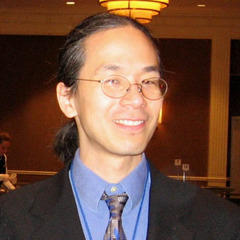
Ted Chiang
Ted Chiang, born in 1967, is an outstanding science fiction writer. His works are renowned for their profound philosophical thinking and exquisite narrative structure, earning him high praise from readers and critics alike. more
You May Also Like
Source: Scent of Triumph
“People only picked the pretty, sweet-smelling flowers. The ones with thorns were left alone.”
Source: Fearscape
Source: Another Faust
“And the yellow sunflower by the brook, in autumn beauty stood.”
Source: Chasing Trains
Source: Watership Down
“A rose trapped inside a fist.”
Source: The Portable Henry Rollins
“Remember that the most beautiful things in the world are the most useless.”
Source: The Stones of Venice: Volume I. The Foundations
Source: Five Flavors of Dumb