Quotessence
Home / Quotes / Quote by Orhan Pamuk

Quote by Orhan Pamuk

“He sensed, now, that the streets on which he sold boza in the night and the universe in his mind were one and the same .... the world within his soul reflected in the shadows of the city.”

Quote by Orhan Pamuk

Work

A Strangeness in My Mind

Browse quotes and source details for this work. more

Author
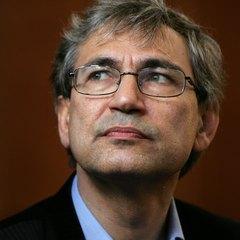
Orhan Pamuk
Orhan Pamuk

Orhan Pamuk, born on June 7, 1952, is a renowned Turkish novelist. His works are characterized by their depiction of Turkish society, history, and culture, and have won him a wide audience. Pamuk has received the Nobel Prize in Literature and is considered a leading figure in Turkish literature. more

You May Also Like

“Your dreams can change the environment which was not conducive for it at first! However it is a good initiative for the dreams that would change one society to be nursed in another environment, before being transplanted to strive in its original environment for the change process to begin!”

“A teenage boy with a Mohawk sat across from me, sneering. I’d seen that look before. Why was it a problem to knit in public? “My grandma knits.” I ignored him. “So what are you making, Grandma?” Mohawk’s voice was ugly. I arched my eyebrow. “A cashmere cock ring. Your grandma ever knit one of those?” The kid’s eyes grew wide, and he suddenly became very interested in a four-year-old issue of Teen Vogue.”

“While in Bombay, I began, on one hand, my study of Indian law and, on the other, my experiments in dietetics in which Virchand Gandhi, a friend, joined me. My brother, for his part was trying his best to get me briefs. The study of India law was a tedious business. The Civil Procedure Code I could in no way get on with. Not so however, with the Evidence Act. Virchand Gandhi was reading for the Solicitor's Examination and would tell me all sorts of stories about Barristers and Vakils.”

“This city was our common ground, I want to tell Kaiz. Not simply its soil, nor its salt or tides, not lines on any map, nor buildings and streets. Something else entirely. An image, a dream, an idea that beguiled both of us: a magical place with chaos in its code, where our stories collided briefly. That romance with the city he carries with him wherever he goes. What it means to me, though, goes beyond what we had in common, it can’t be packed up and transported tidily. Mumbai for me is two people who moved from small coastal towns to this metropolis by the sea and made it their home. My home. And that is how the city is different for the two of us: for him both Mumbai and home were abstractions. Abstractions are at once more fragile and more hardy than reality.”

“Bombay, you will be told, is the only city India has, in the sense that the word city is understood in the West. Other Indian metropolises like Calcutta, Madras and Delhi are like oversized villages. It is true that Bombay has many more high-rise buildings than any other Indian city: when you approach it by the sea it looks like a miniature New York. It has other things to justify its city status: it is congested, it has traffic jams at all hours of the day, it is highly polluted and many parts of it stink.”