Quotessence
Home / Quotes / Quote by George Eliot

Quote by George Eliot

“Yes! Thank God; human feeling is like the mighty rivers that bless the earth: it does not wait for beauty—it flows with resistless force and brings beauty with it... There are few prophets in the world; few sublimely beautiful women; few heroes. I can't afford to give all my love and reverence to such rarities: I want a great deal of those feelings for my every-day fellow-men, especially for the few in the foreground of the great multitude, whose faces I know, whose hands I touch, for whom I have to make way with kindly courtesy.”

Quote by George Eliot

Work

Adam Bede

Adam Bede is a classic novel by George Eliot, published in 1859. The story unfolds in the fictional village of Highbury, offering a detailed portrayal of the social and moral fabric of rural England during the Victorian era. The narrative centers on the lives of Adam Bede, a simple and honest carpenter, and his romantic involvement with Hetty Sorrel, a young woman with a complex character. The novel explores themes of social class, morality, and the consequences of human actions, providing a rich tapestry of the era's rural life. more

Author

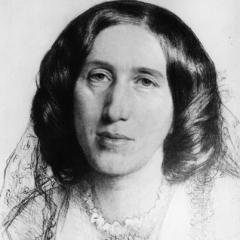
George Eliot
George Eliot

George Eliot, born Mary Ann Evans, was a renowned 19th-century British novelist. Her works are known for their profound psychological insights and critical exploration of social issues. With her unique narrative techniques and rich emotional expression, she has had a profound impact on literature. more

You May Also Like

“For the first time in his life, Mont Blanc for a moment looked to him what it was - a chaos of anarchic and purposeless forces - and he needed days of repose to see it clothe itself again with the illusions of his senses, the white purity of its snows, the splendor of its light, and the infinity of its heavenly peace. Nature was kind; Lake Geneva was beautiful beyond itself, and the Alps put on charms real as terrors.”

“The truth of the matter was something much more subtle and tremendous than any plain physical miracle could ever be. But never mind that. The important thing was that, when I did see the stars (riotously darting in all directions according to the caprice of their own wild natures, yet in every movement confirming the law), the whole tangled horror that had tormented me finally presented itself to me in its truth and beautiful shape. And I knew that the first, blind stage of my childhood had ended.”