Quotessence
Home / Quotes / Quote by John Steinbeck

Quote by John Steinbeck

“I’ve studied and maybe learned how things are, but I’m not even close to why they are. And you must not expect to find that people understand what they do.”

Quote by John Steinbeck

Work

East of Eden

John Steinbeck's 'East of Eden' is a profound and complex narrative that delves into the lives of the Joad family as they navigate the challenges of their time. The story is rich with symbolism and philosophical musings, offering a rich tapestry of human emotions and societal struggles. more
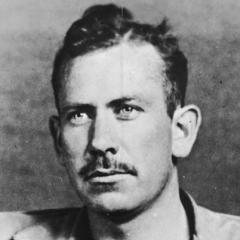
Author

John Steinbeck
John Steinbeck

John Steinbeck was an American author renowned for his profound depiction of American society and the lives of farmers. His works often explore themes of poverty, social injustice, and human nature. Steinbeck was awarded the Nobel Prize in Literature in 1962 for his significant contribution to American literature. more

You May Also Like

“I wanted to pursue things, to know things, but I could not match the means of knowing that came naturally to me with the expectations of professors. The pursuit of knowing was freedom to me, the right to declare your own curiosities and follow them through all manner of books. I was made for the library, not the classroom. The classroom was a jail of other people's interests. The library was open, unending, free. Slowly, I was discovering myself.”

“He jerked his arm back, nearly launched the car keys into the sea, stopped just short of letting go. He needed the car, now more than ever. The idea flattened him. His arm fell limp to his side, the keys back in his pocket. Draining the rest of his whiskey, he settled for hurling the glass into vast ocean darkness. The bottle followed shortly after, though he stumbled in the throw and ended up breaking it on the end of the pier. He made his way back to the laptop. He didn’t learn anything important. Story of his life.”

“Most folks greet confusion with surrender. Most people, when they don’t know what to do, do nothing. The average person meets an obstacle and tells himself, "This is not for me," or "I am not the kind of person who does things like this." Average people respond to confusion in an average way. They stop. But people who achieve extraordinary results think differently. They understand something very significant about confusion. Confusion precedes learning. The anxious thoughts that seem so puzzling or discouraging are actually your very gateway to understanding. Only by persistently doing battle with the things you cannot yet do or that which you do not yet understand can you ever hope to achieve what average people never accomplish. A sign of a person’s maturity is his ability to live with — even in — confusion. The average person meets the edge of confusion and turns away. He runs from confusion at its beginning, at its first appearance. He will not live with or even near confusion and seeks an easier path. The mature person—the high achiever — will understand that life’s grand prizes are guarded by confusion. The mature person senses the victory that exists beyond confusion and says, "I cannot do this... yet. I am not good at this yet, but I will work and learn and become better until I am competent, then excellent, then great! I will struggle and persist through confusion until I break through to the understanding or greater skill required for victory." It's a thought process. It opens up new possibilities for almost everything. The whole concept of "confusion before learning" means that confusion guards the answers we seek. You've got to be willing to enter into and do battle with the confusion in order to reach the victory on the other side... to take your life in a new and incredible direction.”

“Learning’s purest form is realized by the individual who continues a quest beyond the classroom, fueled by a passion to discern wisdom. Wisdom — genuine truth — holds the key to refining one’s thinking. One seed, carefully tended, contains within it the power to change the world, for that single seed can yield an uncountable and ever-increasing number of seeds just as valuable”