Quotessence
Home / Quotes / Quote by Charles Dickens

Quote by Charles Dickens

“The light, bold, fluttering little figure turned and came back safe to me, and I soon laughed at my fears, and at the cry I had uttered; fruitlessly in any case, for there was no one near. But there have been times since, in my manhood, many times there have been, when I have thought, is it possible, among the possibilities of hidden things, that in the sudden rashness of the child and her wild look so far off, there was any merciful attraction of her into danger, any tempting her towards him permitted on the part of her dead father, that her life might have a chance of ending that day. There has been a time since when I have wondered whether, if the life before her could have been revealed to me at a glance, and so revealed as that a child could fully comprehend it, and if her preservation could have depended on a motion of my hand, I ought to have held it up to save her. There has been a time since – I do not say it lasted long, but it has been – when I have asked myself the question, would it have been better for little Emily to have had the waters close above her head that morning in my sight; and when I have answered Yes, it would have been.”

Quote by Charles Dickens

Work

David Copperfield

David Copperfield is a semi-autobiographical novel by Charles Dickens, published in 1850. The story is narrated by the protagonist, David Copperfield, who recounts his life experiences, including his abusive stepfather, his time at school, his first love, and his career as a writer. The novel is renowned for its vivid portrayal of Victorian society and its exploration of themes such as resilience, love, and the struggle for social mobility. more

Author
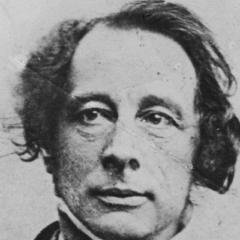
Charles Dickens
Charles Dickens

Charles Dickens, a British writer born on February 7, 1812, and died on June 9, 1870, is one of the greatest novelists of the 19th century. Known for his profound social criticism and vivid narrative style, Dickens' works extensively cover social reality, revealing various issues in the British society of the time. more

You May Also Like

“If we aim to get it right with all youth, a productive starting point is to design teaching and learning to the group (s) of students who have been marginalized the most in society and within schools. Thus, we need frameworks that have been written by people of color and designed for children of color.”

“...ever since he was young there grew a sense that he did not belong. Somehow, he was not like the others, somehow, he spent his days somewhere else, outside space and outside time, to avoid those around him. Not because he wanted to, he was quite innocent then, but because he was forced to the outside of the circle: ostracized, an outcast. Now even in his older years it haunted him still. He wasn’t like the other students at the university.”

“Sunday was a sad day-early to bed, school the next morning, I was constantly worried my homework was wrong-but as I watched the fireworks go off in the night sky, over the floodlit castles of Disneyland, was consumed by a more general sense of dread, of imprisonment I within the dreary round of school and home: circumstances which, to me at least, presented sound empirical argument for gloom. My father was mean, and our house ugly, and my mother didn't pay much attention to me; my clothes were cheap and my haircut too short and no one at school seemed to like me that much; and since all this had been true for as long as I could remember, I felt things would doubtless continue in this depressing vein as far as I could foresee. In short: I felt my existence was tainted, in some subtle but essential way.”

“When I was in Piazza di Spagna, in Rome, I watched (along with others) how many locals came to drink water from the fountain there. The people beside me said to each other "Oh my goodness, how disgusting, people just drink water from anywhere," while the whole time, I was thinking "Oh my goodness, how wonderful, people can drink water from anywhere." We can be in the exact same place, looking at the exact same thing, but see that thing in a completely different way. You can go around the world, and go to all the beautiful places, but never be happy, because happiness is something that you bring inside of you, it is not where you are or what you are looking at, but it is how you are and how you look at.”

“The opposition to Negro education in the South was at first bitter, and showed itself in ashes, insult, and blood; for the South believed an educated Negro to be a dangerous Negro. And the South was not wholly wrong; for education among all kinds of men always has had, and always will have, an element of danger and revolution, of dissatisfaction and discontent. Nevertheless, men strive to know.”