Quotessence
Home / Quotes / Quote by Muriel Rukeyser

Quote by Muriel Rukeyser

Author

Muriel Rukeyser
Muriel Rukeyser

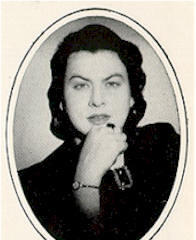
Muriel Rukeyser was an American poet known for her innovative use of language and her exploration of social and political themes. Born on December 15, 1913, she was a prominent figure in the literary world, particularly during the mid-20th century. Rukeyser's work often reflected her deep engagement with the human condition and her commitment to social justice. more

You May Also Like

“I shall not vote for Sen. Obama and it will not be because he—like me and like all of us—carries African genes. And I shall not be voting for Mrs. Clinton, who has the gall to inform me after a career of overweening entitlement that there is 'a double standard' at work for women in politics; and I assure you now that this decision of mine has only to do with the content of her character. We will know that we have put this behind us when [...] we have outgrown and forgotten the original prejudice.”

“I cant take it like this much longer, Milt," Karen said muffledly into the big CKC shirt with its male smell, allowing herself the luxury of letting the bars all the way down for once, enjoying for just this moment the eternal degradation of being a woman. "I cant take it much longer," she whimpered, tasting it, the eternally caught and held hard in the grasp of some man, the forever humiliated heavy weight it was impossible to squirm out from under, the forever helpless except for the mercy of him who always takes what he wants without any, and that all women learn instinctively not to expect [...] That was all they wanted. That was all any of them wanted. You give them the greatest thing you possess, the most intimate secret, and they --- just take it. Well, let them have it. Let them all have some of it. Let them root and rut and rowel, as if it was no more important than that why were they all so anxious to keep it away from each other?”

“As architect of your reality, you are empowered to create it as you choose.”

“[Women] complain about many clerks who attribute all sorts of faults to them and who compose works about them in rhyme, prose, and verse, criticizing their conduct in a variety of different ways. They then give these works as elementary textbooks to their young pupils at the beginning of their schooling, to provide them with exempla and received wisdom, so that they will remember this teaching when they come of age ... They accuse [women] of many ... serious vice[s] and are very critical of them, finding no excuse for them whatsoever. This is the way clerks behave day and night, composing their verse now in French, now in Latin. And they base their opinions on goodness only knows which books, which are more mendacious than a drunk. Ovid, in a book he wrote called Cures for Love, says many evil things about women, and I think he was wrong to do this. He accuses them of gross immorality, of filthy, vile, and wicked behaviour. (I disagree with him that they have such vices and promise to champion them in the fight against anyone who would like to throw down the gauntlet ...) Thus, clerks have studied this book since their early childhood as their grammar primer and then teach it to others so that no man will undertake to love a woman.”

“It grieved him plaguily, he said, to see the nuptial couch defrauded of its dearest pledges: and to reflect upon so many agreeable females with rich jointures, a prey for the vilest bonzes, who hide their flambeau under a bushel in an uncongenial cloister or lose their womanly bloom in the embraces of some unaccountable muskin when they might multiply the inlets of happiness, sacrificing the inestimable jewel of their sex when a hundred pretty fellows were at hand to caress, this, he assured them, made his heart weep.”

“She was decidedly attractive, he saw, but in an ill-natured, ungracious way. Because of his connection with Fitzgerald, Carstairs & Scott, Johnnie had an extensive knowledge of the external appearance and different modes of behavior of a great variety of attractive women: they came up to the office in shoals, with their nails dipped in blood and their faces covered with pale cocoa. And some were charming and simple beneath their masks, and some were complex and arrogant. This girl belonged to the latter type, the type which would ignore or stare surlily at him if he spoke to them, until they learned that the actual money came through him, when their manner sweetened wonderfully. This girl wore her attractiveness not as a girl should, simply, consciously, as a happy crown of pleasure, but rather as a murderous utensil with which she might wound indiscriminately right and left, and which she would only employ to please when it suited her purpose. They were like bad-tempered street-walkers, without walking the street.”

“For he did not, he would have said, care for women; he never felt at home or at ease with them; and that monstrous creature beginning to be talked about, the New Woman of the nineties, filled him with horror. He was a quiet, conventional person, and the world, viewed from the haven of Brookfield, seemed to him full of distasteful innovations; there was a fellow named Bernard Shaw who had the strangest and most reprehensible opinions; there was Ibsen, too, with his disturbing plays; and there was this new craze for bicycles which was being taken up by women equally with men. Chips did not hold with all this modern newness and freedom. He had a vague notion, if he ever formulated it, that nice women were weak, timid, and delicate, and that nice men treated them with a polite but rather distant chivalry.”