“The Oxford Movement, however, brought a new element into the religious life of the nineteenth century. It stood above all for the preservation of the spiritual identity of Christianity, and represents an attempt to restore the Catholic conception of an objective supernatural order and the Catholic idea of divine authority within the boundaries of the Established Church of Protestant England. It was by Newman that these principles were most clearly realized, and through him that they received their full intellectual formulation, but in spite of the differences of character and mentality between the leaders of the Movement, Newman, Keble, Froude and Pusey were all in complete agreement on this fundamental issue. They all stood for Authority and Tradition against Liberalism, for Supematuralism against Rationalism and Naturalism. The fundamental note of the Oxford Movement was its anti-modernism. It is true that they began on the political ground — in a protest against the secularization of the modem State and its claim to interfere with the rights of the Church. But almost at once the conflict became an internal one between the opposing forces in the Church of England — not, however, between High Church and Low Church, between Catholic and Evangelical, but between religious Traditionalism and religious Liberalism. In fact, the first great battle that the Tractarians fought — that against Dr. Hampden — was one in which they had the support of the Evangelicals.”
Quote by Christopher Dawson
Work
The spirit of the Oxford movement,
Browse quotes and source details for this work. more
Author
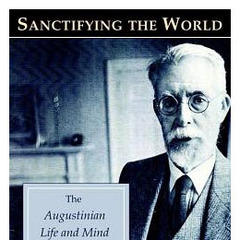
Christopher Dawson
Christopher Dawson was a prominent British historian known for his extensive research on the history of medieval Europe. His works, such as 'The History of the Middle Ages' and 'The Social History of the Middle Ages,' have had a profound impact on the study of medieval history. more
You May Also Like
Source: Green Mars
Source: Boomers: The Men and Women Who Promised Freedom and Delivered Disaster
“The fact-finding mission was now the traditional Washington substitute for policy.”
Source: The March of Folly: From Troy to Vietnam
Source: Cardinal: The Rise and Fall of George Pell
Source: Vigil
Source: Wisdom and Destiny
Source: Traditional Angling: Fennel's Journal No. 6