Quotessence
Home / Quotes / Quote by Charles Williams

Quote by Charles Williams

“. Nature's so terribly good. Don't you think so, Mr. Stanhope?" Stanhope was standing by, silent, while Mrs. Parry communed with her soul and with one or two of her neighbours on the possibilities of dressing the Chorus. He turned his head and answered, "That Nature is terribly good? Yes, Miss Fox. You do mean 'terribly'?" "Why, certainly," Miss Fox said. "Terribly--dreadfully--very." "Yes," Stanhope said again. "Very. Only--you must forgive me; it comes from doing so much writing, but when I say 'terribly' I think I mean 'full of terror'. A dreadful goodness." "I don't see how goodness can be dreadful," Miss Fox said, with a shade of resentment in her voice. "If things are good they're not terrifying, are they?" "It was you who said 'terribly'," Stanhope reminded her with a smile, "I only agreed." "And if things are terrifying," Pauline put in, her eyes half closed and her head turned away as if she asked a casual question rather of the world than of him, "can they be good?" He looked down on her. "Yes, surely," he said, with more energy. "Are our tremors to measure the Omnipotence?”

Quote by Charles Williams

Work

Descent Into Hell

This novel delves into the psychological and philosophical realms, following a character's descent into the abyss of personal and societal corruption. The story is rich with symbolism and introspection, offering a profound examination of the human condition. more

Author
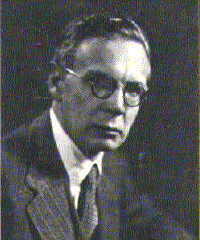
Charles Williams
Charles Williams

Charles Williams, born on September 20, 1886, was a prominent British poet. His poetry is known for its profound philosophical insights and unique style, which had a significant impact on 20th-century British poetry. more

You May Also Like

“As if somehow irony,” she recaps for Maxine, “as practiced by a giggling mincing fifth column, actually brought on the events of 11 September, by keeping the country insufficiently serious — weakening its grip on ‘reality.’ So all kinds of make-believe—forget the delusional state the country’s in already—must suffer as well. Everything has to be literal now.” “Yeah, the kids are even getting it at school.” Ms. Cheung, an English teacher who if Kugelblitz were a town would be the neighborhood scold, has announced that there shall be no more fictional reading assignments. Otis is terrified, Ziggy less so. Maxine will walk in on them watching Rugrats or reruns of Rocko’s Modern Life, and they holler by reflex, “Don’t tell Ms. Cheung!” “You notice,” Heidi continues, “how ‘reality’ programming is suddenly all over the cable, like dog shit? Of course, it’s so producers shouldn’t have to pay real actors scale. But wait! There’s more! Somebody needs this nation of starers believing they’re all wised up at last, hardened and hip to the human condition, freed from the fictions that led them so astray, as if paying attention to made-up lives was some form of evil drug abuse that the collapse of the towers cured by scaring everybody straight again.”

“And it is, indeed, to the more general problem of fetishism that this new twist brings us: after the becoming-sign of the object, the becoming-object of the sign. In the sexual register, the fetish is no longer a sign but a pure object, meaningless in itself - a banal accessory, but one of absolute value, for which there can be no possible exchange. It is that object and no other. But this banal singularity means that any object whatever can become a fetish. Its potentiality is total, precisely because it lies beyond any sexual reference or metaphor. It is the perfect object of sex, its perfect realization, insofar as it substitutes for any real sex - just as Virtual Reality substitutes itself for the real world and in that way becomes the universal form of our modern fetishism. Modern man's immense panoply of information technology has become his true object of (perverse?) desire. Fetishism being, as the name indicates (Feiticho), linked to abstraction and artifice, it is all the more radical for the abstraction being total. If it was possible, in the past, to speak of the fetishism of the commodity, of money, of the simulacrum and the spectacle, that was still a limited fetishism (related to sign-value). There stretches beyond this for us today the world of radical fetishism, linked to the de-signification and limitless operation of the real - to the sign's becoming pure object once again, before or beyond any metaphor.”

“One of the variants of this lethal accomplishment, of this acting-out, is the realization of all metaphors - the collapse of the metaphor into the real. Here, again, we have the phantasm of materializing all that is parable, myth, fable and metaphor. Romain Gary: 'All humanity's metaphors end up becoming realities. I am coming to wonder whether the real aim of science is not a validation of metaphors.”

“You mustn't take anybody's words too literally, not even mine. Look at what literalism has done to the fundamentalists. I don’t want you to make the same mistake as them. And more importantly, I don’t want to be the cause of the horrors brought along by such mistake.”

“No literature is infallible, but while errors in scientific literature are proudly mended by later scientists, errors in religious literature are rarely mended - they are interpreted, reinterpreted, and justified in a million ways, but never questioned, as very few persons of faith have got the brain and backbone to acknowledge errors, let alone correct them - this is not holiness, it's blindness most primitive.”