Quotessence
Home / Quotes / Quote by Thomas Hardy

Quote by Thomas Hardy

“She suddenly thought one afternoon, when looking in the glass at her fairness, that there was yet another date, of greater importance to her than those; that of her own death, when all these charms would have disappeared; a day which lay sly and unseen among all the other days of the year, giving no sign or sound when she annually passed over it; but not the less surely there. When was it? Why did she not feel the chill of each yearly encounter with such a cold relation? She had Jeremy Taylor's thought that some time in the future those who had known her would say, 'It is the -th, the day that poor Tess Durbeyfield died'; and there would be nothing singular to their minds in the statement. Of that day, doomed to be her terminus in time through all the ages, she did not know the place in month, week, season, or year.”

Quote by Thomas Hardy

Work

Tess of the D’Urbervilles

Browse quotes and source details for this work. more

Author
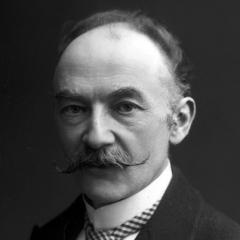
Thomas Hardy
Thomas Hardy

Thomas Hardy, a British novelist born on June 2, 1840, and died on January 11, 1928, is renowned for his novels that depict rural life, reflecting the social changes in 19th-century England. His works often carry a sense of pessimism, depicting the fates of characters with sympathy. more

You May Also Like

“Society has failed women, men, children, fathers , mothers. We have created standards, rules, norms, behavior, trends, lifestyle that destroy us rather than building us. That degrade us rather uplifting us. That oppresses us rather than liberating us. That depresses us rather than cheering us. The sad part is we individually are the society. We are contributing to life by everything we do or say or don’t do or say it .”

“আমরা, এই আধুনিক মানুষেরা, বিজ্ঞানমনস্করা কি বুকে হাত দিয়ে বলতে পারি যে, আমাদের পূর্বপুরুষদের থেকে আমরা সত্যিই উন্নত হয়েছি ? বেশি সুখে আছি ? এই তথাকথিত জীবনযুদ্ধে আমরা কি প্রত্যেকেই অবসাদগ্রস্ত ছিন্নভিন্ন নই? যা আমরা পেয়েছি, আমাদের সভ্যতার, আধুনিকতার পরিবর্তে শুধুমাত্র এই কি প্রার্থিত ছিলো ? যে গন্তব্যে আমরা এসে পৌঁছেছি এবং অদূর ভবিষ্যতে পৌঁছবো তাই কি আমাদের প্রার্থিত ছিলো ? মানুষ হিসেবে, মনুষ্যত্বর বিচারে, ভালোত্বর বিচারে, আমরা কি অনেকই ছোট, লোভী, স্বার্থপর, বিবেকরহিত, অপরিণামদর্শী হয়ে যাইনি ? ঈশ্বর আমাদের কাছে উপহাসের বস্তুও। কেন? তা তলিয়ে ভাবার সময়, অবকাশ এবং গভীরতা আমাদের বেশীরভাগেরই নেই। ঈশ্বরবোধ যে আমাদের ভেতরের শুভ, সত্য এবং শাশ্বত বোধগুলিকে জাগরূকই করে, আমাদের পাশববৃত্তিগুলিকে শাসন করতে উদ্বুদ্ধ করে, আমাদের এক সুন্দর প্রার্থিত নিষ্কলুষ জীবনের দিকে ধাবিত করায়, তা কি আমরা মনে রেখেছি ?”

“Tolerance toward that which is radically evil now appears as good because it serves the cohesion of the whole on the road to affluence or more affluence. The toleration of the systematic moronization of children and adults alike by publicity and propaganda, the release of destructiveness in aggressive driving, the recruitment for and training of special forces, the impotent and benevolent tolerance toward outright deception in merchandizing, waste, and planned obsolescence are not distortions and aberrations, they are the essence of a system which fosters tolerance as a means for perpetuating the struggle for existence and suppressing the alternatives. The authorities in education, morals, and psychology are vociferous against the increase in juvenile delinquency; they are less vociferous against the proud presentation, in word and deed and pictures, of ever more powerful missiles, rockets, bombs--the mature delinquency of a whole civilization.”

“The dramatic changes that occurred in the relationships between humans and animals as societies transitioned from hunting and foraging to herding and farming, and from living in rural to urban and industrialized environments, had major impacts on pathogen evolution. The development, spread and intensification of agriculture, coupled with urbanization and increased connectivity through trade, enhanced opportunities for pathogens to be shared. Populations of potential hosts, human and animal, were increasingly crowded together often in unsanitary environments. These conditions drove pathogen transmission and virulence because they facilitated transmission from heavily infected and very sick individuals.”