Quotessence
Home / Quotes / Quote by Lucinda Riley

Quote by Lucinda Riley

“Ik bedoel, ik dacht dat ik wilde schrijven, maar dat is makkelijker gezegd dan gedaan en ik weet niet of ik er wel zo goed in ben. 'Misschien is de tijd er nog niet rijp voor en komt dat later pas, zoals bij zo veel schrijvers. Voor mij gold dat in ieder geval wel.’ ‘Eigenlijk hou ik heel erg van eenvoudige dingen, het huishouden, koken, tuinieren...’ Abrupt draaide ik me naar haar toe. ‘Ik ben niet zo ambitieus. Is dat erg?”

Quote by Lucinda Riley

Author
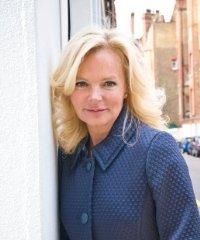
Lucinda Riley
Lucinda Riley

Lucinda Riley is a renowned author known for her historical and romantic novels. Her works are celebrated for their rich historical background and engaging love stories. more

You May Also Like

“Sought we the Scrivani word-work of Surthur Long-lost in ledger all hope forgotten. Yet fast-found for friendship fair the book-bringer Hot comes the huntress Fela, flushed with finding Breathless her breast her high blood rising To ripen the red-cheek rouge-bloom of beauty. “That sort of thing,” Simmon said absently, his eyes still scanning the pages in front of him. I saw Fela turn her head to look at Simmon, almost as if she were surprised to see him sitting there. No, it was almost as if up until that point, he’d just been occupying space around her, like a piece of furniture. But this time when she looked at him, she took all of him in. His sandy hair, the line of his jaw, the span of his shoulders beneath his shirt. This time when she looked, she actually saw him. Let me say this. It was worth the whole awful, irritating time spent searching the Archives just to watch that moment happen. It was worth blood and the fear of death to see her fall in love with him. Just a little. Just the first faint breath of love, so light she probably didn’t notice it herself. It wasn’t dramatic, like some bolt of lightning with a crack of thunder following. It was more like when flint strikes steel and the spark fades almost too fast for you to see. But still, you know it’s there, down where you can’t see, kindling.”

“Every time the politicians we elect attempt to increase our standard of living or employment prospects by increasing government spending to stimulate economic activity (‘Keynesian economics’ as it is called); and every time a national bank tries to increase our standard of living or employment prospects by stimulating economic activity by increasing the money supply (‘quantitative easing’ as it is called), each of those actions has its ideological origins in the ideas contained in John Law’s Money and Trade Considered, and the actions of John Law’s Mississippi Scheme.”