Quotessence
Home / Quotes / Quote by Ben Goldacre

Quote by Ben Goldacre

Work

I Think You'll Find It's a Bit More Complicated Than That

Browse quotes and source details for this work. more

Author
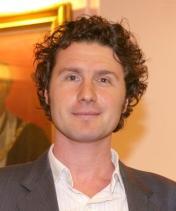
Ben Goldacre
Ben Goldacre

Ben Goldacre is a British physician, writer, and journalist, known for his contributions to medical research and science communication. Born in 1974, Goldacre graduated from Oxford University with a medical degree and began his medical career at a hospital in London. His writing focuses on exposing flaws and misrepresentations in medical research and advocating for more transparent and rigorous research practices. more

You May Also Like

“Few diseases have had an impact on human evolution, culture and society on par with malaria. It is one of the oldest documented infectious diseases. Indeed, it has been hypothesised that the protective effect bestowed by a heterozygous sickle cell allele explains its survival to the modern day. As such, malaria has left its footprint on human evolution in a profound way few other diseases have. Yet its true origins were the matter of considerable controversy. The clue is in the name – the prevailing theory until Ross's discovery was that malaria resulted from 'mala aria', that is, 'bad air'. It took the advent of modern evidence-based medical science to challenge this 'miasma theory'. Ross's elucidation of the role of mosquitoes in the lifecycle of malaria has opened up a new subject for epidemiological consideration: the vector-borne disease.”

“higher antimicrobial loads will result in a lower total pathogenic load but also a lower involvement of the immune system and therefore less immunity in the long run (as indeed has been empirically demonstrated in a number of experiments summarised in a sweeping review by Benoun (2016)). Thus, while rapid and aggressive antimicrobial treatment is sometimes appropriate, the long-term absence of ensuing CD4+ immunity is its cost.”

“This is an infectious disease, Conant began. The CDC case-control study may offer some definitive word on how it was spread, but that research was stalled, probably for lack of resources. We are losing time, and time is the enemy in any epidemic. The disease is moving even if the government isn’t.”

“Concerning intelligence, "the capability to identify what to carefully examine—often a decision driven by mathematical analysis—has become as essential as the capacity to gather the intelligence itself." K. Lee Lerner. Cornwall, U.K. May, 2003. intelligence, "the capability to identify what to carefully examine—often a decision driven by mathematical analysis—has become as essential as the capacity to gather the intelligence itself." -- K. Lee Lerner. Cornwall, U.K. May, 2003.”

“Future generations of effective intelligence and law enforcement officers seeking to thwart the threats posed by tyrants, terrorists, and the technologies of mass destruction might be required to be as knowledgeable in the terminology of epidemiology as they are with the tradecraft of espionage." -- K. Lee Lerner. Cornwall, U.K. May, 2003.”

“Bill Muller was a tall grey-haired man with an apparently high level of vitality despite incessant cigarette smoking. Holding everyone's attention by his forceful personality, he described his invention as a way to make a heavy wheel carry strong magnets past electricity-inducing copper coils without needing to fight the electrical drag force which usually opposes rotation and limits how efficient a generator can be. His wheel didn't have any "stuck" position; it moved freely. "We have a magnetically balanced flywheel." In his basement workshop, Bill showed us the beginnings of a permanent-magnet generator.”

“The current generation of solar and wind power systems generally introduce instability into the electrical utility grid system with their intermittent power generation characteristics and electronically generated harmonic energy.”

“Like the original concept, the stormrider had rectangular blades, sixteen of them radiating out from the hub, each one a flat lattice of struts twenty-five kilometers long, made from the toughest steelsilicon fibers the Commonwealth knew how to manufacture. Twenty-three kilometers of them were covered by an ultra-thin silvered foil, giving a total surface area of over one thousand eight hundred square kilometers for the solar wind to impact on. Even in an ordinary solar system environment that would have produced a considerable torque. In the Half Way system the stormrider was positioned at the Lagrange point between the red star and its neutron companion, right in the middle of the plasma current, where the ion density was orders of magnitude thicker than any normal solar wind. The power the stormrider produced when it was in the thick of the flow was enough to operate the wormhole generator. But it couldn’t simply sit at the Lagrange point producing electricity continuously; that would have been too much like perpetual motion. As the waves of plasma pushed against it, they exerted an unremitting pressure on the blades that blew the stormrider away from the Lagrange point out toward the neutron star. So for five hours the two sets of blades would turn in opposite directions, generating electricity for the Port Evergreen wormhole that was delivered via a zero-width wormhole. The stormrider also stored some of the power, so that at the end of the five hours when it was out of alignment, it had enough of a reserve to fire its onboard thrusters, moving itself even farther out of the main plasma stream where the pressure was reduced. From there it chased a simple fifteen-hour loop back around through open space to the Lagrange point, where the cycle would begin again.”