Quotessence
Home / Quotes / Quote by Suman Pokhrel

Quote by Suman Pokhrel

“As a writer, I believe that showing or letting readers feel is often more convincing than telling, and imagery allows me to accomplish just that.”

Quote by Suman Pokhrel

Author
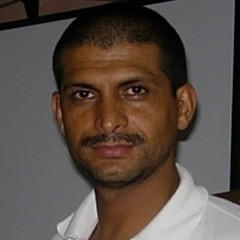
Suman Pokhrel
Suman Pokhrel

Suman Pokhrel, born on September 21, 1967, is a Nepalese poet whose works are known for their profound emotions and critical reflections on social realities. more

You May Also Like

“Climate change may be far beyond the concerns of people in the midst of a life-and-death emergency, but it might eventually make the Mumbai slums uninhabitable, send enormous new waves of refugees across the Mediterranean, and lead to a worldwide crisis in healthcare.”

“Heaviness is uplifting. Heaviness is strengthening. Heaviness is sustainable. Not the gloomy kind of heaviness that characterizes a state of depression and hopelessness—which we must do our best not to fall into when listening to discouraging facts about climate changes and pollution—but the em- powering kind of heaviness that fills your life with substance, when you engage in meaningful projects”

“Yet it has to be recognized that these checklists conform to managerial norms of measuring sustainability because they are made up of easily quantifiable items: more solar roofs, less airborne particulates; more transit riders, less water use per capital; more housing density, less golf courses. Greening the world, from this standpoint, suggests that the ecological crisis can be fixed by making slight technical adjustments to people's habits and interactions with their daily environments. When sustainability is defined by a set of metrics, it reflects a purely physical understanding of how societies strive to be ecologically resilient. By contrast, there are no indexes for measuring environmental justice, no indicators for judging equity of access to the green life, and no technical quantum for assessing the social sustainability of a population. The vogue for green governance by the numbers is a recipe for managing, rather than correcting, inequality.”

“One could argue that time is the most valuable thing we have or “own.” We even seem to have a cultural and societal agreement on this, materializing in sayings like “time flies,” “life is short,” “our children are only on loan,” etc. It therefore seems odd that time is one of the “things” that we easily give away. We sell our time for money that we spend on new consumer goods instead of limiting our consumption in order to make it possible to sell less of our time. We engage in “ought to” events and arrangements that we don’t really want to attend in order to fit in. We waste our time on insignificant series and movies that are provided to us by endless streaming services in order to feel ready for another day of selling our time. This vicious circle is unsustainable.”