Quotessence
Home / Quotes / Quote by William L. Shirer

Quote by William L. Shirer

“One of the worst despots in my time in India was the Maharaja of Patiala. When a group of distinguished Indians once charged him with everything from rape to murder, Lord Irwin ordered an investigation – by a British official chosen by the Maharaja. The investigation was secret, and cleared the ruler. Shortly thereafter, the Maharaja withdrew his support for a self-governing India, and was immediately promoted by the King-Emperor to be an honorary lieutenant general in His Majesty's armed services. Though honorary, it was quite a high rank. ____footnote, Chapter 4”

Quote by William L. Shirer

Work

Gandhi: A Memoir

Browse quotes and source details for this work. more

Author

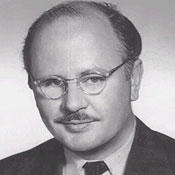
William L. Shirer
William L. Shirer

William L. Shirer was an accomplished American journalist, renowned for his coverage of World War II. His work, 'The Berlin Diary,' provided a detailed account of the rise of Nazi Germany and the lead-up to the war, becoming a classic historical document. more

You May Also Like

“So as long as there is a third party in the country, that is, the British, these dissensions will not end. They will go on growing. They will disappear only when an iron dictator rules India for twenty years. For a few years at least after the end of British rule in India, there must be a dictatorship. No other constitution can flourish in this country. And it is to India's good that she should be ruled by a dictator, to begin with. None but a dictator can wipe out such dissensions. India does not suffer from one ailment, she suffers from so many political ills that only a ruthless dictator can cure her of these, India needs a Kamal Pasha.”

“The true father of free India was Subhas Chandra Bose, not Gandhi. Imagine Commander Washington asking his troops to never fire back a single musket ball no matter how many british guns are fired at them. And that's exactly what Gandhi asked of his people. Bose eventually raised the Indian National Army to fight against the British in India. Subhas Chandra Bose is to India what George Washington is to the United States of America. Unfortunately, Bose lost his life in a plane crash in 1945, but had he lived, he would've been the rightful prime minister of India, not Jawaharlal Nehru, who was more of a scholar, than a leader. However, the death of Bose and the struggles of the Indian National Army lighted the fire of revolution in the heart of the entire nation empowering them to revolt against the mighty British Empire, which compelled the British to leave all imperialist authority over India in the year 1947.”

“Linlithgow identified the obstacles to progress as Indian political stupidity and British political dishonesty, but he was himself a master of the ability to say something which meant very little, and to decorate it with qualifications like ‘in the light of the then circumstances’, and ‘subject to such modifications as may seem desirable’.”

“India and Burma have no natural association with the Empire, from which they are alien by race, history and religion, and for which as such neither of them have any natural affection, and both are in the Empire because they are conquered countries which have been brought there by force, kept there by our controls, and which hitherto it has suited to remain under our protection. …Lord Linlithgow, Viceroy of India, 1942”

“India will never, within any time that we can foresee, be an efficient country, organised and governed on Western lines. In her development to self-government we have got to be prepared to accept a degree of inefficiency comparable to that in China, Iraq or Egypt . . . [W] e cannot continue to resist reform because it will make the administration less efficient.’ - Wavell to Churchill, July 1944”

“Quite how iniquitous they (the Indian Princes) were will never be known, because Corfield told his officials to extract from the files any evidence of what were called ‘eccentricities’ on the part of the princes. No fewer than four tons of eccentricities were burned, to the annoyance of both Mountbatten, who knew just how eccentric royals could be, and Nehru.”