Quotessence
Home / Quotes / Quote by Plato

Quote by Plato

“Rather I think that a man who ... is willing ... to value learning as long as he lives, not supposing that old age brings him wisdom of itself, will necessarily pay more attention to the rest of his life.”
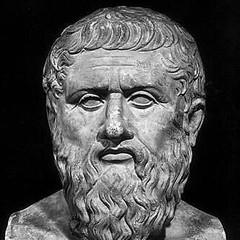
Quote by Plato

Book:Laches

Work

Laches

In this classical work, the character Socrates engages in a discussion with his interlocutor, Laches, about the nature of courage and its relation to virtue and justice. The dialogue delves into the complexities of moral philosophy and ethical reasoning. more

Author

Plato
Plato

Plato (428 BC - 348 BC) was a prominent Greek philosopher, one of the most influential figures in Western philosophy. He founded the Academy, which was the first institution of higher education in the Western world. Plato's philosophy, centered around the theory of Forms, emphasized the importance of reason and morality. more

You May Also Like

“I was nineteen years five months old when I fell in love for the first time. This seemed to me a profound, advanced age; never can we anticipate being older than we are, or wiser; if we're exhausted, it's impossible to anticipate being strong; as, in the grip of a dream, we rarely understand that we're dreaming, and will escape by the simplest of methods, opening our eyes.”

“Due to some dim but irresistible notion of the way things are, it is simply not possible, out of order, not apprpriate to the situation at hand, if, within the circle of those who are experienced and advanced in years, the young person declaims ethical generalities. Young people will again and again find themselves in a situation that is so irritating, astounding, and incomprehensible to them that their word falls on deaf ears, while the word of an older person is heard and has weight even though its content is no different at all. It will be a sign of maturity or immaturity whether this experience leads them to understand that what is at stake here is not the stubborn self-satisfaction of old age, or the anxious effort to keep youth in their place, but the pereservation or violation of an essential ethical law. Ethical discourse needs authorization, which youth are simply not able to bestow upon themselves, even if they speak out of the purest pathos of their ethical conviction. Ethical discourse does not merely depend on the correct content of what is said, but also on the speaker being authorized to say it. Its validity depends not only on what is said, but also on who says it.”