Quotessence
Home / Quotes / Quote by Charles Dickens

Quote by Charles Dickens

“[S]ome score of members of the High Court of Chancery bar ought to be --- as here they are --- mistily engaged in one of the ten thousand stages of an endless cause, tripping one another up on slippery precedents, groping knee-deep in technicalities, running their goat-hair and horse-hair warded heads against walls of words, and making a pretence of equity with serious faces ....”

Quote by Charles Dickens

Work

Bleak House

Charles Dickens' 'Bleak House' is a profound and intricate novel set in the 19th century. It delves into the legal system and its impact on individuals, using the Jarndyce and Jarndyce case as a central narrative device. The story intertwines the lives of numerous characters, each facing their own struggles and challenges within the context of the law and the broader societal issues of the era. more

Author

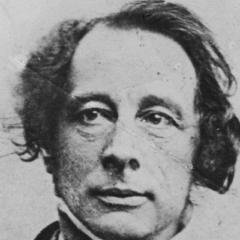
Charles Dickens
Charles Dickens

Charles Dickens, a British writer born on February 7, 1812, and died on June 9, 1870, is one of the greatest novelists of the 19th century. Known for his profound social criticism and vivid narrative style, Dickens' works extensively cover social reality, revealing various issues in the British society of the time. more

You May Also Like

“I asked Baskerville whether the issue wasn’t about deadbeat dads who refuse to support their children. Baskerville replied: “The stereotype of the deadbeat dad is almost entirely feminist propaganda. Most of these fathers have not abandoned their children. They have had their children stolen from them by the family courts.” Baskerville paints a picture of judicial and legal corruption where, typically, the father is ordered out of the home and becomes homeless. If the father refuses to spend large amounts of money on an expensive lawyer he is penalized with unreasonably high child support payments. It is a case of plunder, only it occurs under the color of law.”

“Panama Papers, at no point, penetrates the term corruption within its context; however, it is the conception of the media under the shadow of intelligence agencies' collaboration and its agenda. In fact, it shows just the disinformation or hiding of the truth from the income tax offices, which demonstrates their intimacy too; otherwise, it was impossible to purchase objects and subjects without the help of such interior ones. None of those involved states have faced the verdict by the courts that execute it as corruption. The media and the investigation team of Panama Papers fail to establish its precision and validity, except for the wordy story of corruption that prevails. Journalists must and should be fair and stay within their journalistic limits.”

“I sensed that if I were ever to meet [Senator Orrin] Hatch face-to-face there would be little that we could agree upon. There was something about watching Hatch that reminded me of unpleasant, futile political arguments I had had in my life. I wondered whether such political disagreements did not issue from underlying, perhaps even innate. characteristics. Certainly, experience teaches us that when we encounter another person whom we instinctively dislike, constructive political dialogue is not likely to follow. Humans can intuitively sense through a variety of subtle clues (i.e., dress, accent, gestures) when another person possesses a mix of cultural and psychological characteristics that is so substantially different to our own that political discord is also likely. Put otherwise, a liberal can usually smell a conservative, and vice versa. Moreover, the smell is not a pleasant one. -- Red Genes, Blue Genes: Exposing Political Irrationality”

“Our certitude and vehemence in political argument are way out of proportion to our knowledge...In politics, everybody is always very sure that they are right. But they simply can't be. When the Democrats and Republicans take opposed positions, they can't both be right. Thus, on any critical policy debate, about half the electorate and politicians are completely wrong, yet are blithely and majestically assured that they are right.”

“The conflict between left and right in modern republics is a sort of perpetual-motion mechanism and negative spiral at the same time. When we support political parties, it is regrettable more than just a matter of adopting certain political beliefs. We are also expected to agree that our party's beliefs are better than those held by the other party. Feelings of hostility and superiority are an inevitable byproduct of partisan competition. The media encourages representatives of both sides to vent their emotions, because this sells newspapers and boosts ratings. When we hear that other disagree viscerally with us, we tend to return the feeling of emotional dislike.”