“The satyr, as the Dionysiac chorist, dwells in a reality sanctioned by myth and ritual. That tragedy should begin with him, that the Dionysiac wisdom of tragedy should speak through him, is as puzzling a phenomenon as, more generally, the origin of tragedy from the chorus. Perhaps we can gain a starting point for this inquiry by claiming that the satyr, that fictive nature sprite, stands to cultured man in the same relation as Dionysian music does to civilization. Richard Wagner has said of the latter that it is absorbed by music as lamplight by daylight. In the same manner, I believe, the cultured Greek felt himself absorbed into the satyr chorus, and in the next development of Greek tragedy state and society, in fact everything that separates man from man, gave way before an overwhelming sense of unity that led back into the heart of nature. This metaphysical solace (which, I wish to say at once, all true tragedy sends us away) that, despite every phenomenal change, life is at bottom indestructibly joyful and powerful, was expressed most concretely in the chorus of satyrs, nature beings who dwell behind all civilization and preserve their identity through every change of generations and historical movement. With this chorus the profound Greek, so uniquely susceptible to the subtlest and deepest suffering, who had penetrated the destructive agencies of both nature and history, solaced himself. Though he had been in danger of craving a Buddhistic denial of the will, he was saved through art, and through art life reclaimed him.”
Quote by Friedrich Nietzsche
Work
Friedrich Nietzsche's seminal work delves into the psychological and aesthetic aspects of tragedy, examining its role in human life and its influence on art and philosophy. more
Author
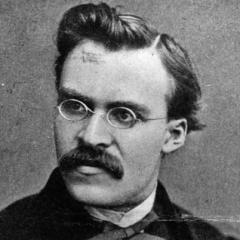
Friedrich Nietzsche was a German philosopher, cultural critic, poet, and writer whose works have had a profound impact on subsequent philosophy, literature, and thought. His ideas revolve around concepts such as the 'will to power', the 'Übermensch', and the 'eternal recurrence'. more
You May Also Like
“I’ll choose a hard truth over a gentle lie. Every single time.”
“It would be nice to see some honesty in police internal affairs.”
“Ama bazı şeyler yürekle sezilir.”
“Kendi kafanla düşünmeyi öğrenmelisin.”
“There can be no integrity without transparency.”
“A famine has set in; a famine of hearing the truth...”