Quotessence
Home / Quotes / Quote by William Makepeace Thackeray

Quote by William Makepeace Thackeray

Work

The Book of Snobs

This book delves into the psychology and social dynamics behind snobbery, offering insights into the motivations and actions of those who exhibit snobbish tendencies. more
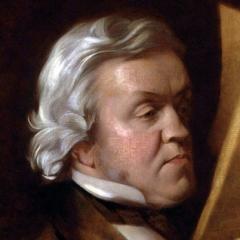
Author

William Makepeace Thackeray

William Makepeace Thackeray was a prominent British novelist of the Victorian era, born on July 18, 1811, in India, and died on December 24, 1863. He is known for his satirical and humorous writing style and is considered one of the greatest novelists of the 19th century. His most famous work, 'Vanity Fair', is regarded as a classic of English literature. more

You May Also Like

“Believe it or not, the notions of free will and destiny are not mutually exclusive. Predestination is the universal framework of limits (based on natural physical laws) placed upon us. Free will is our infinite ability to make choices within that framework. Because the universal scale is so great—and most of it constitutes an undiscovered frontier—our choices are only limited by our knowledge, our abilities, and our imagination. To put it simply, the world is such a huge playground sandbox that we will never run out of sand or reach the faraway safety fence of destiny. So go out there and play!”

“When we come under the spell of the deeper domain of technology, its economic character and even its power aspect fascinate us less than its playful side. Then we realize we that we are involved in a play, a dance of the spirit, which cannot be grasped by calculation. What is ultimately left for science is intuition alone - a call of destiny. This playful feature manifests itself more clearly in small things than in the gigantic works of our world. The crude observer can only be impressed by large quantities - chiefly when they are in motion - and yet there are as many organs in a fly as in a leviathan.”

“I, to Bennet, represented five pounds ten shillings' worth of goods bought at the market-place, and the buyer wanted, as a business man, to have his money's worth. The man was, of course, within his rights; everybody wants the worth of their money, and who was I, a boy bought for less than a spavined horse, to rail against the little sorrows which Destiny imposed upon me? I was only an article of exchange, something which represented so much amidst the implements and beasts of the farm; but having a hear and a soul I felt the position acutely.”

“Ser Kevan remembered the girl she once had been, so full of life and mischief. And when she’d flowered, ahhhh … had there ever been a maid so sweet to look upon? If Aerys had agreed to marry her to Rhaegar, how many deaths might have been avoided? Cersei could have given the prince the sons he wanted, lions with purple eyes and silver manes … and with such a wife, Rhaegar might never have looked twice at Lyanna Stark. The northern girl had a wild beauty, as he recalled, though however bright a torch might burn it could never match the rising sun. But it did no good to brood on lost battles and roads not taken. That was a vice of old done men. Rhaegar had wed Elia of Dorne, Lyanna Stark had died, Robert Baratheon had taken Cersei to bride, and here they were.”