“{Yogananda on the death of his dear friend, the eminent 20th century scientist, Luther Burbank} His heart was fathomlessly deep, long acquainted with humility, patience, sacrifice. His little home amid the roses was austerely simple; he knew the worthlessness of luxury, the joy of few possessions. The modesty with which he wore his scientific fame repeatedly reminded me of the trees that bend low with the burden of ripening fruits; it is the barren tree that lifts its head high in an empty boast. I was in New York when, in 1926, my dear friend passed away. In tears I thought, 'Oh, I would gladly walk all the way from here to Santa Rosa for one more glimpse of him!' Locking myself away from secretaries and visitors, I spent the next twenty-four hours in seclusion... His name has now passed into the heritage of common speech. Listing 'burbank' as a transitive verb, Webster's New International Dictionary defines it: 'To cross or graft (a plant). Hence, figuratively, to improve (anything, as a process or institution) by selecting good features and rejecting bad, or by adding good features.' 'Beloved Burbank,' I cried after reading the definition, 'your very name is now a synonym for goodness!”
Quote by Paramahansa Yogananda
Work
This book is an autobiographical account of the Indian yogi and guru Paramahansa Yogananda. It describes his early life in India, his spiritual training under his guru Sri Yukteswar, and his eventual journey to the United States to spread the teachings of Kriya Yoga. The narrative includes stories of miraculous events, meetings with various spiritual figures, and insights into the philosophy of yoga and meditation. First published in 1946, it has been widely influential in introducing Eastern spirituality to the Western world. more
Author
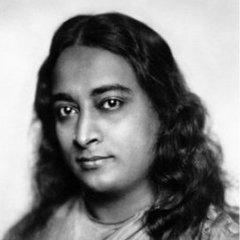
Paramahansa Yogananda was an Indian spiritual teacher born on January 5, 1893, and passed away on March 7, 1952. He is considered one of the key figures in spreading yoga and Indian spiritual philosophy in the Western world, profoundly influencing the understanding of Eastern spiritual traditions in the West. more
You May Also Like
“Benevolence is often very peremptory.”
“The greatest melancholy is created by failing to initiate the change of discontent.”
“Kindness is still the best antidote.”
“Non-attachment grounded in faith allows good to return to you.”