“that is the very. best time of life, he thought: lost time. the time of summer when the leaves of the trees are tangled in the iridescent sunlight. he thought always of his childhood as an uninterrupted summertime when lazy happiness dulled and delighted his brain and limb. to remember the summer and the run through tall grasses. the sun bathed his arms and legs an earthy brown and he was perfect and unaware and this is how it was in the afternoon: the house was white and high and remote upon the hill and the graveled drive was like a pebbly ribbon that had been dropped carelessly on the lawn, the drive upon which he. had run and the garden beside it where he had lain to crush the fragrant flowers. and far away, yet not too far, the cool sound of the running stream. grasses grew beside the stream and at a certain spot, a certain secret hidden spot, the foliage was pushed away, pressed into a narrow length, not so narrow as a grave, not so narrow that. one should lie alone. and together on the general summer day that was his childhood, awed and silent, they had listened to the whisper of the cool water, they had basked in the sunlight, his tousled head upon her breast, his eager small body in the crook of her moist arm. they had breathed together quietly, reverently, both aware of the earth's breathing. and turning sleepily, warmly on the earth, his lost voice asking, 'mother, where does the water run?' and the answering miracle, ' to the sea, down to the sea...”
Quote by John Edward Williams
Author
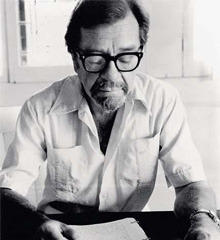
John Edward Williams
John Edward Williams, born on August 29, 1922, was a renowned American author. His works are known for their profound social insight and unique literary style, primarily focusing on the history and culture of the American South. Williams' life and writing career provide readers with a deep understanding of the social changes in the Southern United States. more
You May Also Like
Source: Making Wishes: Quotes, Thoughts, & a Little Poetry for Every Day of the Year
“Books are wishing stars fallen to Earth, waiting for people to live their dreams through reading.”
Source: Being Bold: Quotes, Poetry, & Motivations for Every Day of the Year
“Sometimes, the Best Adventures are the Ones We can only Dream about.”
Source: Your Favorite Thomas the Tank Engine
Source: राग दरबारी
Source: The Old Patagonian Express: By Train Through the Americas
Source: Trociny
Source: Devil's Daughter
Source: Hands of Orlac