Quotessence
Home / Quotes / Quote by Charles Dickens

Quote by Charles Dickens

“What is he to learn? To imitate? Or to avoid? When your friends the bees worry themselves about their sovereign, and become perfectly distracted touching the slightest monarchical movement, are we men to learn the greatness of Tuft-hunting, or the littleness of the Court Circular? I am not clear, Mr. Boffin, but that the hive may be satirical.' At all events, they work,' said Mr. Boffin. Ye-es,' returned Eugene, disparagingly, 'they work; but don't you think they overdo it?”

Quote by Charles Dickens

Author
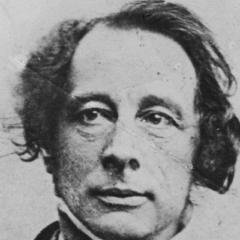
Charles Dickens
Charles Dickens

Charles Dickens, a British writer born on February 7, 1812, and died on June 9, 1870, is one of the greatest novelists of the 19th century. Known for his profound social criticism and vivid narrative style, Dickens' works extensively cover social reality, revealing various issues in the British society of the time. more

You May Also Like

“I didn't grow up feeling smart and special, the world my oyster, born with a silver shucker in my hand. No one works harder than you, that's the way Zell and Juwon liked to put it. Everything I have is because I was the dutiful worker bee or because I have no other things to distract me, like girlfriends or wives, like mewling kids or family dogs or a love of weekend brunches and fantasy football, or a single, sad hobby, like solitaire or the Sunday jumble. I have this.”

“I made spasmodic efforts to work, assuring myself that once I began working I would forget her. The difficulty was in beginning. There was a feeling of weakness, a sort of powerlessness now, as though I were about to be ill but was never quite ill enough, as though I were about to come down with something I did not quite come down with. It seemed to me that for the first time in my life I had been in love, and had lost, because of the grudgingness of my heart, the possibility of having what, too late, I now thought I wanted. What was it that all my life I had so carefully guarded myself against? What was it that I had felt so threatened me? My suffering, which seemed to me to be a strict consequence of having guarded myself so long, appeared to me as a kind of punishment, and this moment, which I was now enduring, as something which had been delayed for half a lifetime. I was experincing, apparently, an obscure crisis of some kind. My world acquired a tendency to crumble as easily as a soda cracker. I found myself horribly susceptible to small animals, ribbons in the hair of little girls, songs played late at night over lonely radios. It became particularly dangerous for me to go near movies in which crippled girls were healed by the unselfish love of impoverished bellhops. I had become excessively tender to all the more obvious evidences of the frailness of existence; I was capable of dissolving at the least kind word, and self-pity, in inexhaustible doses, lay close to my outraged surface. I moved painfully, an ambulatory case, mysteriously injured.”