Quotessence
Home / Quotes / Quote by Graham Hancock

Quote by Graham Hancock

“The black mat formed on top of the layer of proxies,' Allen replies. 'Down here it has a lot of charcoal in it. But it also has algal remains so it's not just fire. The Younger Dryas changed the climate and made the area much wetter. Algae began to grow along the edges of the lakes.' He puts a hand on the black stripe along the arroyo wall: 'So the remains of about 1,000 years of dead algae, charcoal, and a lot of other stuff are all embedded in here, and at the bottom of it, where the impact happened, we find iridium, platinum, and a layer of melted spherules where the temperatures must have been so high that they would have melted a modern car into a pool of metal.”

Quote by Graham Hancock

Work

America Before: The Key to Earth's Lost Civilization

Browse quotes and source details for this work. more

Author
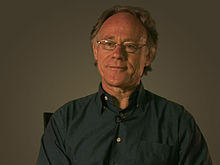
Graham Hancock
Graham Hancock

Graham Hancock is a British writer known for his research into ancient civilizations and mysterious phenomena. His works delve into the mysteries of human history and culture, including ancient Egypt, the Maya, and Atlantis. more

You May Also Like

“In the case of the Younger Dryas, the jeopardy that humanity faced was not from nuclear missiles but from the incoming fragments of a disintegrating giant comet, traveling at tens of kilometers per second, with the larger fragments as deadly as hundreds of nuclear warheads. Indeed, it is estimated that the total explosive power of the comet fragments that struck the earth in repeated episodes over a period of 21 years some 12,800 years ago would have been of the order of 10 million megatons--1,000 times greater than all the nuclear devices stockpiled in the world today.”

“What we are looking for [...] is an agent capable--simultaneously and almost instantaneously--of bringing about all of the following: -a global flood -wildfires across an area of 10 million km2 -6 months of icy darkness followed by more than 1,000 years of glacially cold weather -a stratum of soil across more than 50 million km2 dated to the Younger Dryas Boundary (YDB) and infused with a cocktail of nanodiamonds, high-temperature iron-rich spherules, glassy silica-rich spherules, meltglass, platinum, iridium, osmium, and other exotic materials -a mass extinction of megafauna Wolfbach and her coauthors are forthright in their conclusion: 'Multiple lines of ice-core evidence appear synchronous, and this synchroneity of multiple events makes the YD interval one of the most unusual climate episodes in the entire Quaternary record. ... A cosmic impact is the only known event capable of simultaneously producing the collective evidence.”

“My argument has long been that the Edfu Building Texts reflect real events surrounding a real cataclysm that unfolded between 12,800 and 11,600 years ago, a period known to paleoclimatologists as the Younger Dryas and that the Texts call the 'Early Primeval Age.' I have proposed that the seeds of what was eventually to become dynastic Egypt were planted in the Nile Valley in that remote epoch more than 12,000 years ago by the survivors of a lost civilization and that it was at this time that structures such as the Great Sphinx and its associated megalithic temples and the subterrranean chamber beneath the Great Pyramid were created. I have further proposed that something resembling a religious cult or monastery, recruiting new initiates down the generations, deploying the memes of geometry and astronomy, disseminating an 'as-above-so-below' system of thought, and teaching that eternal annihilation awaited those who did not serve and honor the system, would have been the most likely vehicle to carry the ideas of the original founders across the millennia until they could be brought to full flower in the Pyramid Age.”

“My feet," said Montag. "I can't move them. I feel so damn silly. My feet won't move!" "Listen. Easy now," said the old man gently. "I know, I know. You're afraid of making mistakes. Don't be. Mistakes can be profited by. Man, when I was young I shoved my ignorance in people's faces. They beat me with sticks. By the time I was forty my blunt instrument had been honed to a fine cutting point for me. If you hide your ignorance, no one will hit you and you'll never learn.”