Quotessence
Home / Quotes / Quote by Leo Tolstoy

Quote by Leo Tolstoy

“War is not a polite recreation but the vilest thing in life, and we ought to understand that and not play at war. Our attitude towards the fearful necessity of war ought to be stern. It boils down to this: we should have done with humbug, and let war be war and not a game. Otherwise, war is a favourite pastime of the idle and frivolous...”

Quote by Leo Tolstoy

Author
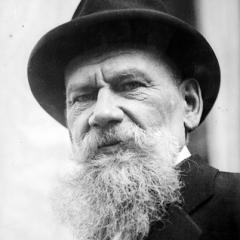
Leo Tolstoy
Leo Tolstoy

Leo Tolstoy was a Russian writer and thinker, a prominent representative of 19th-century Russian literature. His works deeply revealed social contradictions and human nature, and had a profound impact on the world. more

You May Also Like

“There are a dozen different ways of delivering destruction in impersonal wholesale, via ships and missiles of one sort or another, catastrophes so widespread, so unselective, that the war is over because that nation or planet has ceased to exist. What we do is entirely different. We make war as personal as a punch in the nose. We can be selective, applying precisely the required amount of pressure at the specified point at a designated time . . . . We are the boys who go to a particular place, at H-hour, occupy a designated terrain, stand on it, dig the enemy out of their holes, force them then and there to surrender or die. We're the bloody infantry, the doughboy, the duckfoot, the foot soldier who goes where the enemy is and takes him on in person. We've been doing it, with changes in weapons but very little change in our trade, at least since the time five thousand years ago when the foot sloggers of Sargon the Great forced the Sumerians to cry "Uncle!" Maybe they'll be able to do without us someday. Maybe some mad enius with myopia, a bulging forehead, and a cybernetic mind will devise a weapon that can go down a hole, pick out the opposition, adn force it to surrender or die--without killing that gang of your own people they've got imprisoned down there. I wouldn't know; I'm not a genius, I'm an M.I. In the meantime, until they build a machine to replace us, my mates can handle that job--and I might be some help on it, too.”

“- Suntem într-un loc, de care nu aparținem, făcând lucruri pe care nu demult nu mi le-aș fi imaginat, fiind parte din acest război care nu este al nostru. Dar pentru ei, totul pare normal, ai omorât de-ai mei, voi omorî mai mulți de-ai tăi. Mi-ai violat femeile, voi viola mai multe de-ale tale și așa mai departe. Am văzut și am făcut lucruri pe care mi-a fost greu să le accept, iar eu nici măcar nu sunt un combatant ca tine. Chiar nu te înțeleg cum poți tu trece zi de zi prin toate astea, fără să-ți pierzi mințile, pentru că eu simt că încep să o iau razna.”

“Cu cel care îți este camarad de arme, împarți și bune și rele. Împarți căldura sufocantă a verii și soarele arzător ce-ți bate-n cap în timp ce mărșăluiești. Împarți ploile toamnei, ce transformă în noroi drumurile, tranșeele și gropile individuale. Împarți frigul și asprimea iernii, iar atunci când totul e înghețat în jurul tău, orice sursă de căldură fizică sau sufletească, o împarți cu el. Primăvara, când natura revine la viață, împarți dorul de cei dragi, de casă, de viața de dinainte de război. Cu cel ce îți este camarad, împarți bucurii și suferințe, posibil chiar și groapa comună de la sfârșit, dar mai ales viața în cele mai improprii și vrăjmașe condiții. Simion adresându-i-se lui Paul”

“Ce puțini au mai rămas, constată cu tristețe Ăl Bătrân. Aruncând o privire peste chipurile militarilor din fața sa, constată cu o strângere de inimă schimbarea dură care se petrecuse cu supraviețuitorii regimentului său. Cu doar câteva luni în urmă, juma de an cel mult, când plecase din garnizoană, regimentul era format din tineri în jurul vârstei de douăzeci de ani, unii chiar mai tineri. Cu excepția câtorva subofițeri și a unora dintre ofițerii superiori, marea majoritate a trupei, precum și a ofițerilor inferiori erau tineri și foarte tineri. Tineri care-și văzuseră camarazii omorâți în feluri diferite, unul mai oribil ca celălalt. Tineri care își omorâse inamicul în tot atât de multe și oribile moduri precum și camarazii lor fuseseră uciși. Tineri care nu mai erau tineri. Acum însă, chipurile ce-l priveau erau maturizate cu mult înainte de vreme. Cu fețele arse de soare, bătute de vânt și ploaie, cu trupurile chinuite de arșița verii, de sete și foame, obosiți după marșurile lungi și nedormiți, dar mai ales căliți în focul luptelor pe care le-au purtat de la începutul războiului, în fața sa se aflau veterani ai Campaniei de eliberare a Basarabiei și Bucovinei de Nord, precum și ai Campaniei de cucerire a Odessei. Și totuși, ce puțini au mai rămas.”

“With the one who is your brother in arms, you share both good and bad. You share the sweltering heat of summer and the burning sun that beats down on your head as you march. You share the autumn rains that turn roads, trenches and individual foxholes to mud. You share the cold and harshness of winter, and when everything is frozen around you, any source of physical or soul warmth, you share it with him. In spring, when nature comes back to life, you share the longing for loved ones, for home, for life before the war. With your comrade, you share joys and sorrows, possibly even the mass grave at the end, but above all life in the worst and most unfriendly conditions. Simion addressing Paul”

“But, like all metaphoric wars, the copyright wars are not actual conflicts of survival. Or at least, they are not conflicts for survival of a people or a society, even if they are wars of survival for certain businesses or, more accurately, business models. Thus we must keep in mind the other values or objectives that might also be affected by this war. We must make sure this war doesn't cost more than it is worth. We must be sure it is winnable, or winnable at a price we're willing to pay.”