Quotessence
Home / Quotes / Quote by Jared Taylor

Quote by Jared Taylor

“Serving officers dare not criticize diversity for fear it will kill their careers. Only after he retired did Army Green Beret Major Andy Messing say that Special Forces units should be homogeneous because this promotes cohesion. He said differences of race or religion add to the tensions of a grinding training regimen and perilous combat missions. A recent book-length study of cohesion in Civil War units found that soldiers were less likely to desert if they were fighting alongside men who resembled them in ethnicity, religion, and occupation, and who came from the same part of the country. Authors Dora Costa and Matthew Kahn concluded that men were most likely to risk their lives for men who were most like themselves. They also found that Union veterans’ health was worse in old age if they had seen a lot of combat but were surprised to discover that this effect disappeared for soldiers who had fought in very homogeneous units. Fighting alongside close comrades immunized them against battle trauma.”

Quote by Jared Taylor

Work

White Identity: Racial Consciousness in the 21st Century

Browse quotes and source details for this work. more

Author
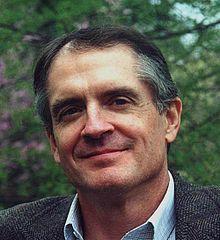
Jared Taylor
Jared Taylor

Jared Taylor, born on September 15, 1951, is an American journalist known for his views on racism and immigration issues. He was the editor of 'American Renaissance' magazine and has contributed articles to various publications, including 'The American Conservative' and 'The New American'. more

You May Also Like

“The more intimate the setting, the greater the challenges of diversity. Adopted children, for example, often report they never felt they fit in. In a British study of adults who were adopted as children, 46 percent of whites adopted by whites said they felt a sense of not belonging. For non-whites adopted by whites, the figure rose to close to 75 percent. Researchers reported that their constant refrain was, “Love is not enough.” There can be worse: The authors of a 2005 study on domestic violence in the United States reached the sobering conclusion that “the incidence of spousal homicide is 7.7 times higher in interracial marriages compared to intraracial marriages.” One study for the period 1979 to 1981 found that white men who married black women were 21.4 times more likely to be killed by their spouses than white men who married white women. A white woman increased her risk of being killed 12.4 times by marrying a black man. Marrying a white did not appreciably change a black person’s risk of being killed by his or her spouse.”

“Most white Americans believe elections should be a choice of policies rather than expressions of racial identity. If Americans vote for a candidate because of his racial agenda, representative government is crippled. Democratic systems operate well only when politicians recognize that even if their opponents’ approaches may be different, all parties are trying to work for the good of the country as a whole. When politics fracture along racial lines, it becomes easy to assume that elected officials work for narrow, ethnic interests, and political contests become very bitter. The ultimate logic of politics in a racially fractured electorate is a system of quotas in which seats in elective bodies are set aside in proportion to the racial composition of the population. This is the formula hopelessly divided countries such as Lebanon and immediate post-white-rule Zimbabwe and South Africa hit upon. It could be the solution for other divided countries such as Iraq, Sudan, Fiji, Malaysia, or Sri Lanka, where politics is a perpetual squabble over ethnic interests. There is already implied support for proportional racial representation in the federal approach to voter districts. The US Department of Justice has long required that congressional districts be gerrymandered to create black and Hispanic majorities that are expected to vote along racial lines and send one of their own to Congress. The department also routinely sues cities that choose their governing bodies in at-large elections. If, for example, a city is 30 percent black but has no blacks on the city council because all candidates must appeal to the entire city, voting must be switched to a ward system, with wards drawn so that blacks—by voting for people like themselves have approximately 30 percent of the council seats. In 2006, the Justice Department used precisely this argument to threaten Euclid, Ohio, with litigation if it did not replace its at-large elections with a system of eight separate wards. In 2010, Hispanics made the same argument when they sued the city of Compton: They claimed that an at-large voting system shut them out and kept the city council all black.”

“Although political representation by racial quota is the effect of government policy, it is not yet respectable to call for it explicitly. When President Bill Clinton tried to appoint Lani Guinier as Assistant Attorney General for Civil Rights her appointment failed, in part because of Miss Guinier’s advocacy of representation by race. In her view, if blacks were 13 percent of the US population, 13 percent of seats in Congress should be set aside for them. It does not cause much comment, however, when the Democratic Party applies this thinking to its selection of delegates to presidential conventions. Each state party files an affirmative action plan with the national party, and many states set quotas. For the 2008 Democratic Convention, California mandated an over-representation of non-white delegates. Blacks, Asians, and Hispanics were only 4.6, 5.2, and 21.1 percent, respectively, of the Democratic electorate, but had to be 16, 9, and 26 percent of the delegates. Other states had similar quotas. Procedures of this kind do lead to diversity of delegates but suggest that race is more important than policy. Perhaps it is. In Cincinnati, where blacks are 40 to 45 percent of the population, Mayor Charlie Luken complained that the interests of blacks and whites seemed so permanently in conflict that “race gets injected into every discussion as a result.” In other words, any issue can become racial. In 2004, the Georgia legislature passed a bill to stop fraud by requiring voters to show a state-issued ID at the polls. People without drivers’ licenses could apply for an ID for a nominal fee. Black legislators felt so strongly that this was an attempt to limit the black vote that they did not merely vote against the law; practically the entire black delegation stormed out of the Capitol when the measure passed over their objections. In 2009, when Congress voted a stimulus bill to get the economy out of recession, some governors considered refusing some federal funds because there were too many strings attached. Jim Clyburn, a black South Carolina congressman and House Majority Whip, complained that rejecting any funding would be a “slap in the face of African-Americans.” Race divides Cook County, Illinois, which contains Chicago. In 2007, when the black president of the county board, Todd Stroger, could not get his budget passed, his floor leader William Beavers-also black—complained that it was “because he’s black.” He said there was only one real question: 'Who’s gonna control the county—white or black—that’s all this is.”

“Whites impose these rules on themselves because they know blacks, in particular, are so quick to take offense. Radio host Dennis Prager was surprised to learn that a firm that runs focus groups on radio talk shows excludes blacks from such groups. It had discovered that almost no whites are willing to disagree with a black. As soon as a black person voiced an opinion, whites agreed, whatever they really thought. When Mr. Prager asked his listening audience about this, whites called in from around the country to say they were afraid to disagree with a black person for fear of being thought racist. Attempts at sensitivity can go wrong. In 2009, there were complaints from minority staff in the Delaware Department of Transportation about insensitive language, so the department head, Carolann Wicks, distributed a newsletter describing behavior and language she considered unacceptable. Minorities were so offended that the newsletter spelled out the words whites were not supposed to use that the department had to recall and destroy the newsletter. The effort whites put into observing racial etiquette has been demonstrated in the laboratory. In experiments at Tufts University and Harvard Business School, a white subject was paired with a partner, and each was given 30 photographs of faces that varied by race, sex, and background color. They were then supposed to identify one of the 30 faces by asking as few yes-or-no questions as possible. Asking about race was clearly a good way to narrow down the possibilities —whites did not hesitate to use that strategy when their partner was white—but only 10 percent could bring themselves to mention race if their partner was black. They were afraid to admit that they even noticed race. When the same experiment was done with children, even white 10- and 11-year olds avoided mentioning race, though younger children were less inhibited. Because they were afraid to identify people by race if the partner was black, older children performed worse on the test than younger children. “This result is fascinating because it shows that children as young as 10 feel the need to try to avoid appearing prejudiced, even if doing so leads them to perform poorly on a basic cognitive test,” said Kristin Pauker, a PhD candidate at Tufts who co-authored the study. During Barack Obama’s campaign for President, Duke University sociologist Eduardo Bonilla-Silva asked the white students in his class to raise their hands if they had a black friend on campus. All did so. At the time, blacks were about 10 percent of the student body, so for every white to have a black friend, every black must have had an average of eight or nine white friends. However, when Prof. Bonilla-Silva asked the blacks in the class if they had white friends none raised his hand. One hesitates to say the whites were lying, but there would be deep disapproval of any who admitted to having no black friends, whereas there was no pressure on blacks to claim they had white friends. Nor is there the same pressure on blacks when they talk insultingly about whites. Claire Mack is a former mayor and city council member of San Mateo, California. In a 2006 newspaper interview, she complained that too many guests on television talk shows were “wrinkled-ass white men.” No one asked her to apologize. Daisy Lynum, a black commissioner of the city of Orlando, Florida, angered the city’s police when she complained that a “white boy” officer had pulled her son over for a traffic stop. She refused to apologize, saying, “That is how I talk and I don’t plan to change.” During his 2002 reelection campaign, Sharpe James, mayor of Newark, New Jersey, referred to his light-skinned black opponent as “the faggot white boy.” This caused no ripples, and a majority-black electorate returned him to office.”

“History is a delicate matter in a diverse country. Shortly after the fall of the Alamo—likewise in 1836—Mexican troops defeated the Texans at the Battle of Coleto Creek near Goliad, Texas. The Texans surrendered, believing they would be treated as prisoners of war. Instead, the Mexicans marched the 300 or so survivors to Goliad and shot them in what became known as the Goliad Massacre. Mexicans resent the term “massacre.” With the city of Goliad now half Hispanic, they insist on “execution.” Many Anglos, said Benny Martinez of the Goliad chapter of the League of United Latin American Citizens (LULAC), “still hate Mexicans and using ‘massacre’ is a subtle way for them to express it.” Watertown, Massachusetts, had a different disagreement about history. In 2007, the town’s more than 8,000 Armenian-Americans were so angry at the Anti-Defamation League’s refusal to recognize the World War I Turkish massacres of Armenians as genocide that they persuaded the city council to cut ties with the ADL’s “No Place For Hate” program designed to fight discrimination. Other towns with a strong Armenian presence—Newton, Belmont, Somerville, and Arlington—were considering breaking with the ADL. Filmmaker Ken Burns has learned that diversity complicates history. When he made a documentary on the Second World War, Latino groups complained it did not include enough Hispanics—even though none had seen it. Mr. Burns bristled at the idea of changing his film, but Hispanics put enough pressure on the Public Broadcasting Service to force him to. Even prehistory is divisive. In 1996, two men walking along the Columbia River in Washington State discovered a skeleton that was found to be 9,200 years old. “Kennewick Man,” as the bones came to be called, was one of the oldest nearly complete human skeletons ever uncovered in North America and was of great interest to scientists because his features were more Caucasian than American Indian. Local Indians claimed he was an ancestor and insisted on reburying him. It took more than eight years of legal battles before scientists got full access to the remains.”

“There was a flap in Fremont, California, about how to celebrate the Fourth. The city put up American flags, to be sure, but vice mayor Steven Cho thought this was not inclusive enough, so the American flag shared honors with flags from 25 other countries, including Qatar and Mongolia. San Francisco celebrates diversity with cash. In 1999, the Cinco de Mayo Carnival and Parade got $162,500, the Japanese Cherry Blossom Parade got $40,000, the American Indian Festival got $27,000, Martin Luther King Day got $21,000, Juneteenth got $13,000, Samoan Flag Day got $12,000, and the Min Sok Korean Festival got $7,500. Veterans were angry to be fobbed off with only $1,000 for Veterans Day.”

“The push for diversity can lead to absurd results. Bone marrow donations almost never work unless donor and recipient are the same race, so non-white patients suffer because almost all the people who register as donors are white. In 2008, the National Marrow Donor Program announced that all marrow registries would be required to meet quotas for minority donors. Officials at St. Luke’s Mountain States Tumor Institute in Boise, Idaho said they would have to shut down their donor registry because the demographics of the region made it impossible to find more than a handful of non-white donors. Likewise, the largely white Amity Regional School District that serves the eastern suburbs of New Haven, Connecticut, stood to lose tens of thousands of dollars in federal money because it did not have enough non-white autistic students. The district had no control over who was diagnosed with the condition, but federal officials said a ratio of 38 whites, one black, and one Asian was “significantly disproportionate,” and threatened to withhold $67,000.”

“The conflicts described [...]—school and prison violence, racial power struggles, discrimination lawsuits, language barriers, religious differences, a complex and unforgiving racial etiquette—are direct consequences of diversity. Whatever their leaders may tell them, ordinary Americans have not failed to notice this. A 2007 poll asked non-whites whether “racial tension” in the United States is either a “very important problem,” “somewhat important,” or not a problem at all. No less than 93 percent of Hispanics thought it was very or somewhat important (79 percent said “very important”), 92 percent of blacks thought it was very or somewhat important (65 percent said “very important”), and 73 percent of Asians thought it was very or somewhat important (37 percent said “very important”). When asked to agree or disagree with the statement, “There is a lot of discrimination against my community in the United States,” 92 percent of blacks, 85 percent of Hispanics, and 57 percent of Asians agreed. Many Americans do not expect things to get much better. A 2004 Gallup poll asked, “Do you think that relations between blacks and whites will always be a problem for the United States, or that a solution will eventually be worked out?” Fifty-seven percent of blacks, 44 percent of whites and 42 percent of Hispanics said black-white relations would always be a problem. In 2010, only 36 percent of voters thought relations were improving between blacks and whites; among blacks only 13 percent saw improvement. Nor, as we have seen, are relations bad only between whites and non-whites. A 2007 survey found that 61 percent of Hispanics, 54 percent of Asians, and 47 percent of blacks would rather do business with whites than with members of the other two groups. According to a 2010 Rasmussen poll, 50 percent of voters thought relations were getting worse between whites and Hispanics; only 21 percent thought they were getting better. The same poll found that 34 percent of voters thought black-Hispanic relations were deteriorating while only 16 percent thought they were improving.”

“Just about the only serious argument anyone tries to make in favor of diversity echoes Jonathan Alger, a lawyer who has argued before the Supreme Court in favor of racial preferences: “Corporations have to compete internationally,” he says, and “cross-cultural competency is a key skill in the work force.” This argument assumes that people get along best with people like themselves, that Koreans, for example, can do business most effectively with other Koreans. Presumably, if the United States has a large population of Koreans they will be a bridge between Korea and the United States. For that to work, however, Korean-Americans should not fully assimilate because if they do, they will lose the qualities that make them an asset. America should give up the ideal of Americanization that, in a few generations, made Englishmen, Dutchmen, Germans, Swedes, the Irish, and all other Europeans essentially indistinguishable. Do we really want to give up the idea of assimilation? Or should only racial minorities give up on assimilation? More to the point, is a diverse population really an advantage in trade or international affairs? Japan is one of the most racially homogeneous nations. It would be hard to find a country that so clearly practices the opposite of American-style diversity, but it is one of the most successful trading nations on earth. If diversity were a key advantage, Brazil, Indonesia, Sudan, Malaysia, and Lebanon would be world leaders in trade. Other great trading nations—Taiwan, Korea and China—are, if anything, even more closed and exclusionist than Japan. Germany is likewise a successful trading nation, but its trade surpluses cannot be attributed to cultural or racial diversity. Only since the 1960s has it had a large non-German minority of Turks who came as guest workers, and there is no evidence that Turks have helped Germany become more of a world presence or even a better trade partner with Turkey. The world’s consumers care about price and quality, not the race or nationality of the factory worker. American corporations boast about workforces that “look like America,” but they are often beaten in their own market by companies whose workforces look like Yokohama or Shanghai. If we really took seriously the idea that “cross-cultural competence” was crucially important, we would adjust the mix of immigrants accordingly. We might question the wisdom of Haitian immigration, for example, since Haiti is a small, poor country that is never likely to be an important trade partner. And do 32 million Mexican-Americans help our trade relations with the world—or even with Mexico? Canada is our number-one trading partner. Should we therefore encourage immigration from Canada? No one ever talks about immigration in these terms because at some level everyone understands that diversity has nothing to do with trade or influence in the world. The “cross-cultural competence” argument is artificial.”