Quotessence
Home / Quotes / Quote by George Saunders

Quote by George Saunders

Work

A Swim in a Pond in the Rain

Browse quotes and source details for this work. more

Author
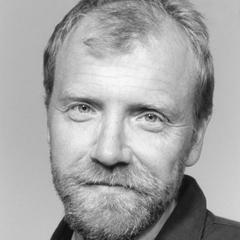
George Saunders
George Saunders

George Saunders, born on December 2, 1958, is an American writer known for his unique humor and profound insights. His works, primarily short stories, have gained widespread recognition and have been honored with numerous literary awards, including the Pulitzer Prize. more

You May Also Like

“A person of bourgeois origin goes through life with some expectation of getting what he wants, within reasonable limits. Hence the fact that in times of stress 'educated' people tend to come to the front; they are no more gifted than the others and their 'education' is generally quite useless in itself, but they are accustomed to a certain amount of deference and consequently have the cheek necessary to a commander. That they will come to the front seems to be taken for granted, always and everywhere. In Lissagaray's History of the Commune there is an interesting passage describing the shootings that took place after the Commune had been suppressed. The authorities were shooting the ringleaders, and as they did not know who the ringleaders were, they were picking them out on the principle that those of better class would be the ringleaders. An officer walked down a line of prisoners, picking out likely-looking types. One man was shot because he was wearing a watch, another because he 'had an intelligent face'.”

“Trotsky once wrote: "How many Aristoteles are herding swine? And how many swineherds are sitting on thrones?" Class society impoverishes people, not just materially but psychologically. The lives of millions of human beings are confined to the narrowest limits. Their mental horizons are stunted. Socialism would release all the colossal potential that is being wasted by capitalism.”

“How to be a Poet (to remind myself) i Make a place to sit down. Sit down. Be quiet. You must depend upon affection, reading, knowledge, skill—more of each than you have—inspiration work, growing older, patience, for patience joins time to eternity… ii Breathe with unconditional breath the unconditioned air. Shun electric wire. Communicate slowly. Live a three-dimensional life; stay away from screens. Stay away from anything that obscures the place it is in. There are no unsacred places; there are only sacred places and desecrated places. iii Accept what comes from silence. Make the best you can of it. Of the little words that come out of the silence, like prayers prayed back to the one who prays, make a poem that does not disturb the silence from which it came.”

“It is an obvious fact that the banks and big monopolies are now dependent on the state for their survival. As soon as they were in difficulties, the same people who used to insist that the state must play no role in the economy, ran to the government with their hands out, demanding huge sums of money. And the government immediately gave them a blank cheque. Trillions of pounds of public money has been handed over to the banks, totalling some $14 trillion. But the crisis continues to deepen. All that has been achieved in the last four years is to transform what was a black hole in the finances of the banks into a black hole in public finances. In order to save the bankers, everybody is expected to sacrifice, but for the bankers and capitalists no sacrifices are demanded. They pay themselves lavish bonuses with the money of the taxpayer. This is Robin Hood in reverse.”

“Just as Charles Darwin explains that species are not immutable, and that they possess a past, a present and a future, changing and evolving, so Marx and Engels explain that a given social system is not something eternally fixed. That is the illusion of every epoch. Every social system believes that it represents the only possible form of existence for human beings, that its institutions, its religion, its morality are the last word that can be spoken. That is what the cannibals, the Egyptian priests, Marie Antoinette and Tsar Nicolas all fervently believed. And that is what the bourgeoisie and its apologists today wish to demonstrate when they assure us, without the slightest basis, that the so-called system of "free enterprise" is the only possible system - just when it is beginning to sink.”

“The evil stepmother is a fixture in European fairy tales because the stepmother was very much a fixture in early European society–mortality in childbirth was very high, and it wasn’t unusual for a father to suddenly find himself alone with multiple mouths to feed. So he remarried and brought another woman into the house, and eventually they had yet more children, thus changing the power dynamics of inheritance in the household in a way that had very little to do with inherent, archetypal evil and everything to do with social expectation and pressure. What was a woman to do when she remarried into a family and had to act as mother to her husband’s children as well as her own, in a time when economic prosperity was a magical dream for most? Would she think of killing her husband’s children so that her own children might therefore inherit and thrive? [...] Perhaps. Perhaps not. But the fear that stepmothers (or stepfathers) might do this kind of thing was very real, and it was that fear–fed by the socioeconomic pressures felt by the growing urban class–that fed the stories. We see this also with the stories passed around in France–fairies who swoop in to save the day when women themselves can’t do so; romantic tales of young girls who marry beasts as a balm to those young ladies facing arranged marriages to older, distant dukes. We see this with the removal of fairies and insertion of religion into the German tales. Fairy tales, in short, are not created in a vacuum. As with all stories, they change and bend both with and in response to culture.”