Quotessence
Home / Quotes / Quote by Zora Neale Hurston

Quote by Zora Neale Hurston

“It's uh known fact, Pheoby, you got tuh go there tuh know there. Yo' papa and yo' mama and nobody else can't tell yuh and show yuh. Two things everybody's got tuh do fuh theyselves. They got tuh go tuh God, and they got tuh find out about livin' fuh theyselves.”

Quote by Zora Neale Hurston

Work

Their Eyes Were Watching God

This novel follows the life of Janie Crawford, a woman who seeks independence and self-fulfillment in a society that limits her options. It delves into themes of identity, love, and the search for personal freedom. more

Author
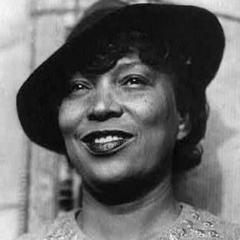
Zora Neale Hurston
Zora Neale Hurston

Zora Neale Hurston (1891-1960) was an American anthropologist, folklorist, and novelist who played a pivotal role in the Harlem Renaissance. Born in Alabama and raised in Eatonville, Florida, she became the first African American student at Barnard College, Columbia University, studying under Franz Boas. Hurston is best known for her novel "Their Eyes Were Watching God," now considered a classic of American literature. She conducted extensive anthropological fieldwork in the American South and Caribbean, preserving African American folk traditions. Though largely forgotten after her death, her work was revived by Alice Walker in the 1970s, establishing her as a foundational figure in African American literature and anthropology. more

You May Also Like

“And sometimes, when I find that sweet solitude, I hear warnings about isolation. Some summers, when I was alone in the wilderness, content in my tiny trailer at the edge of the lake, I would not speak to or see another human being for weeks. There, I could slow it all down. I felt the power of life being lived around and within me. I became like a sun warmed rock in the centre of the stream. The water parted around me, eddied in spirals, and flowed on, gently wearing away all my sharp edges. Once, a man who is my lover and friend, I wanted to be more, came to see me there unexpectedly. I had just split an arm load of wood and was carrying it into the trailer as he appeared. He stayed only briefly. Later he told me, “When I came down the driveway and saw you standing there with the wood in your arms, your face glowing from the wind off the lake and the effort of chopping wood, I thought, ‘She belongs to this place. She’s at home here, alone in the bush. She’s not missing me, doesn’t need me here.’ I felt like an intruder.” His observation surprised me. I heard the voice of my mother warning, “You are too independent. Don’t get too good at being alone or you’ll end up by yourself. Everyone needs someone.” Her fear finds a small corner in me, but I resist the idea that I will be with another only to avoid being alone. Surely, the ability to truly be with myself does not exclude the willingness to fully be with another. I do not seek isolation. The longing for another remains even when I am able to be with myself, although it is smaller, a whisper that tugs at me gently. Even there, in my place of solitude in the wilderness, I found myself at moments wanting to turn to someone and share my awe at the brilliance of the full moon on the still water, the delight of watching otters playing at the edge of the stream. But the loneliness was bittersweet and bearable because I knew myself and the world in a way I sometimes do not when I let my life become too full of doing things that do not really need to be done.”

“To make democracy work, Jayaprakash Narayan suggests, to undo tyranny, it is only necessary for India to return truly to itself. The Ramraj that Gandhi offered is no longer simply Independence, India without the British; it is people's government, the reestablishment of the ancient Indian village republic, a turning away from the secretariats of Delhi and the state capitals. But this is saying nothing; this is to leave India where it is. What looks like a political programme is only clamour and religious excitation. People's government and the idea of the ancient village republic (which may be a fanciful idea, a nationalist myth surviving from the days of the Independence struggle) are not the same thing. Old India has its special cruelties; not all the people are people.”

“The truth was, I was not just afraid to be alone—I was unprepared. Even though I considered myself to be a free-thinking, independent individual, the strands of my life had always been enmeshed with others, something that was now being revealed to me in so many ways.”

“It was a day filled with relief and grief in equal measure. I mourned for the fact that we would not create memories together. I mourned for the fact that we would not create memories together. I rejoiced for the fact that we would not create more memories together. I cried because both of those opposing states were true.”

“Then you clean it up! I’m sick of cleaning it and having you come in and mess it up again,’ Hud would say. ‘I’m not your maid.’ ‘You are, though,’ Jay would say. ‘Just like I’m the fluff and fold around here.’ Jay was in charge of the laundry. He handled his sisters’ underwear and bathing suits with chopsticks, unwilling to touch them whether they were clean or dirty. But Jay quickly became a wiz at stain removal, each mark a puzzle to solve. He threw himself into searching the right combination of liquids that would unlock the dirt from Kit’s soccer shorts. He found the golden ticket by asking an older woman in the laundry aisle what she did to get out grass stains. Turned out it was Fels-Naptha. Worked like a charm. ‘Look at this, motherfucker!’ Jay called out to the rest of the house one day from the garage. ‘Good as fucking new!’ Kit peeked her head in to see her white shorts bright as the sun, unblemished. ‘Wow,’ she said. ‘Maybe you can open Riva’s Laundry.”