Quotessence
Home / Quotes / Quote by Joseph Conrad

Quote by Joseph Conrad

“The wicked people were gone, but fear remained. Fear always remains. A man may destroy everything within himself, love and hate and belief, and even doubt; but as long as he clings to life he cannot destroy fear: the fear, subtle, indestructible, and terrible, that pervades his being; that tinges his thoughts; that lurks in his heart; that watches on his lips the struggle of his last breath.”

Quote by Joseph Conrad

Work

Almayer's Folly and Tales of Unrest

Browse quotes and source details for this work. more

Author
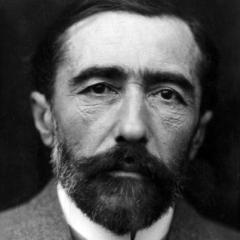
Joseph Conrad
Joseph Conrad

Joseph Conrad, born on December 3, 1857 in Poland and died on August 3, 1924 in the United Kingdom, was a renowned British author of the late 19th and early 20th centuries. He is known for his profound descriptions of maritime life and his insightful explorations of human nature. more

You May Also Like

“There were days so clear and skies so brilliant blue, with white clouds scudding across them like ships under full sail, and she felt she could lift right off the ground. One moment she was ambling down a path, and the next thing she knew, the wind would take hold of her, like a hand pushing against her back. Her feet would start running without her even willing it, even knowing it. And she would run faster and faster across the prairie, until her heart jumped like a rabbit and her breath came in deep gasps and her feet barely skimmed the ground. It felt good to spend herself this way. The air tasted fresh and delicious; it smelled like damp earth, grass, and flowers. And her body felt strong, supple, and hungry for more of everything life could serve up. She ran and felt like one of the animals, as though her feet were growing up out of the earth. And she knew what they knew, that sometimes you ran just because you could, because of the way the rush of air felt on your face and how your legs reached out, eating up longer and longer patches of ground. She ran until the blood pounded in her ears, so loud that she couldn't hear the voices that said, You're not good enough, You're not old enough, You're not beautiful or smart or loveable, and you will always be alone. She ran because there were ghosts chasing her, shadows that pursued her, heartaches she was leaving behind. She was running for her life, and those phantoms couldn't catch her, not here, not anywhere. She would outrun fear and sadness and worry and shame and all those losses that had lined up against her like a column of soldiers with their guns shouldered and ready to fire. If she had to, she would outrun death itself. She would keep on running until she dropped, exhausted. Then she would roll over onto her back and breathe in the endless sky above her, sun glinting off her face. To be an animal, to have a body like this that could taste, see hear, and fly through space, to lie down and smell the earth and feel the heat of the sun on your face was enough for her. She did not need anything else but this: just to be alive, cool air caressing her skin, dreaming of Ivy and what might be ahead.”

“I believed I could identify the scent of the sky as I stood there, a blue menthol fragrance similar to the scent of seawater that sprayed into my face when I first dove into the ocean. That initial scent was much more subtle than the ocean's heavy, fishy aroma; it was a whiff of salt and mint, just as I approached the water on a dive, that warned me that a more powerful scent would soon enter my nose. It was the scent I dreamed in. And it was the scent of that spring sky as I stood in my yard.”