Quotessence
Home / Quotes / Quote by Thich Thien-An

Quote by Thich Thien-An

Work

Author

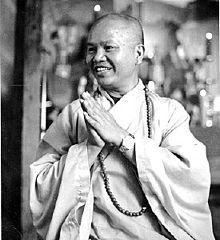
Thich Thien-An
Thich Thien-An

Thich Thien-An, an individual with an unknown profession, and the exact birth and death dates are not available. more

You May Also Like

“What properly constitutes the study of Zen in the Zendo life is to study on the one hand the writings or sayings or in some cases the doings of the ancient masters and on the other to practise meditation. This practising is called in Japanese to do zazen, while the studying of the masters consists in attending the discourses given by the teacher of the Zendo known as Rōshi.”

“Much of this picture of Zen derives from portrayals found in such normative texts of the tradition as the lamp anthologies (Ch. teng-lu), huge collections of the hagiographies and basic instructions of hundreds of masters in the various lineages of Zen. But such texts were never intended to serve as guides to religious practice or as records of daily practice; they were instead mythology and hagiography, which offered the student an idealized paradigm of the Zen spiritual experience. Many scholars of Zen have mistakenly taken these lamp anthologies at face value as historical documents and presumed that they provide an accurate account of how Zen monks of the premodern era pursued their religious vocations. They do not.”

“Modern Zen training offers a matrix within which to evaluate the way one tradition of Zen understands—and puts into practice—the doctrines and teachings of its religion. While Zen training in Korea will differ in certain respects from that followed by the patriarchs and ancient masters of classical Ch'an in China or by Zen monks in Japan, it is an authentic model of how the monks of one national tradition of Zen have tackled "the practical matter of how to live with [their] belief.”

“Korean Zen—known as Son—is also a tradition worthy of far more attention than it has gleaned to date in Western scholarship. Indeed, given the pervasive emphasis on Japanese forms of Zen found in Western literature on the tradition (as indicated by our common English usage of the Japanese pronunciation "Zen" to represent all the national branches of the school), we may forget that there are other, equally compelling and authentic approaches to Zen thought and practice found elsewhere in Asia.”