Quotessence
Home / Quotes / Quote by Elisabeth Elliot

Quote by Elisabeth Elliot

“Our vision is so limited we can hardly imagine a love that does not show itself in protection from suffering. The love of God is of a different nature altogether. It does not hate tragedy. It never denies reality. It stands in the very teeth of suffering. The love of God did not protect His own Son. The cross was the proof of His love – that He gave that Son, that He let Him go to Calvary’s cross, though “legions of angels” might have rescued Him. He will not necessarily protect us - not from anything it takes to make us like His Son. A lot of hammering and chiseling and purifying by fire will have to go into the process.”

Quote by Elisabeth Elliot

Author
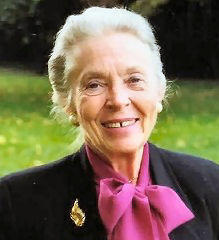
Elisabeth Elliot
Elisabeth Elliot

Elisabeth Elliot was an American author known for her descriptions of missionary life and profound explorations of Christian faith. Her works, including 'In This Day of Grace' and 'Passion and Purity', have influenced countless readers. more

You May Also Like

“There are people who are destined to taste only the poison in things, for whom any surprise is a painful surprise and any experience a new occasion for torture. if someone were to say to me that such suffering has subjective reasons, related to the individual's particular makeup, i would then ask; is there an objective criterion for evaluating suffering? who can say with precision that my neighbor suffers more than i do or that jesus suffered more than all of us? there is no objective standard because suffering cannot be measured according to the external stimulation or local irritation of the organism, but only as it is felt and reflected in consciousness. alas, from this point of view, any hierarchy is out of the question. each person remains with his own suffering, which he believes absolute and unlimited. how much would we diminish our own personal suffering if we were to compare it to all the world's sufferings until now, to the most horrifying agonies and the most complicated tortures, the mostcruel deaths and the most painful betrayals, all the lepers, all those burned alive or starved to death? nobody is comforted in his sufferings by the thought that we are all mortals, nor does anybody who suffers really find comfort in the past or present suffering of others. because in this organically insufficient and fragmentary world, the individual is set to live fully, wishing to make of his own existence an absolute.”

“-’Tell me’, he said, ‘who gives better offerings, a miserable man or a happy one’? -’A happy one, of course.’ -’Wrong. A happy man is too occupied with his life. He thinks he is beholden to no one. But make him shiver, kill his wife, cripple his child, then you will hear from him. He will starve his family for a month to buy yo a pure-white yearling calf. If he can afford it, he will buy you a hundred’. -’But surely, I said, you have to reward him eventually. Otherwise he will stop offering’. -’Oh, you would be surprised how long he will go on. But yes, in the end, it’s best to give him something. Then he will be happy again. And you can start over.”

“Why d’you make me suffer?" “Because I love you.” Now it was his turn to get angry. “No, no, you don’t love me! People in love want happiness, not pain!” “People in love want only love, even at the cost of pain.” “Then you’re making people suffer on purpose.” “Yes, to see if you love me.” The Baron’s philosophy would not go any further. “Pain is a negative state of the soul.” “Love is all.” “Pain should always be fought against.” “Love refuses nothing.” “Some things I’ll never admit.” “Oh yes, you do, now, for you love me and you suffer.”

“Many will argue that there is nothing remotely spiritual in combat. Consider this. Mystical or religious experiences have four common components: constant awareness of one's own inevitable death, total focus on the present moment, the valuing of other people's lives above one's own, and being part of a larger religious community such as the Sangha, ummah, or church. All four of these exist in combat. The big difference is that the mystic sees heaven and the warrior sees hell. Whether combat is the dark side of the same version, or only something equivalent in intensity, I simply don't know. I do know that at the age of fifteen I had a mystical experience that scared the hell out of me and both it and combat put me into a different relationship with ordinary life and eternity. Most of us, including me, would prefer to think of a sacred space as some light-filled wonderous place where we can feel good and find a way to shore up our psyches against death. We don't want to think that something as ugly and brutal as combat could be involved in any way with the spiritual. However, would any practicing Christian say that Calvary Hill was not a sacred space?”

“He loves me so he hurts me To try and make me good. It doesn't work. I'm just too bad And don't do what I should. My memory has so many different sections and, like all survivors, there are so many compartments with so many triggers. I'll remember a smell which reminds me of a man which reminds me of a place which reminds me of another man who I think was with a woman who had a certain smell — and I'm back to square one. This is the case for most survivors, I believe. When we try to put together our pasts, the triggers are many and varied, the memories are disjointed — and why wouldn't they be? We were children. Even someone with an idyllic childhood who is only trying to remember the lovely things which happened to them will scratch their head and wonder who gave them that doll and was it for Christmas or their third birthday? Did they have a party when they were four or five? When did they go on a plane for the first time? You see, even happy memories are hard to piece together — so imagine how hard it is to collate all of the trauma, to pull together all of the things I've been trying to push away for so many years.”

“Just after the climax of the trilogy The Lord of the Rings, Sam Gamgee discovers that his friend Gandalf was not dead (as he thought) but alive. He cries, “I thought you were dead! But then I thought I was dead myself! Is everything sad going to come untrue?” The answer of Christianity to that question is—yes. Everything sad is going to come untrue and it will somehow be greater for having once been broken and lost.”

“Every age, every culture, every custom and tradition has its own character, its own weakness and its own strength, its beauties and ugliness; accepts certain sufferings as matters of course, puts up patiently with certain evils. Human life is reduced to real suffering, real hell, only when two ages, two cultures and religions overlap. A man of the Classical Age who had to live in medieval times would suffocate miserably just as a savage does in the midst of our civilization. Now there are times when a whole generation is caught in this way between two ages, two modes of life, with the consequence that it loses all power to understand itself and has no standard, no security, no simple acquiescence. Naturally, everyone does not feel this equally strongly. A nature such as Nietzsche’s had to suffer our present ills more than a generation in advance. What he had to go through alone and misunderstood, thousands suffer today.”