Quotessence
Home / Quotes / Quote by Mitch Landrieu

Quote by Mitch Landrieu

“They were erected purposefully to send a strong message to all who walked in their shadows about who was still in charge in this city.”

Quote by Mitch Landrieu

Author
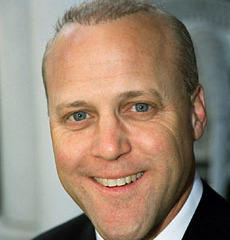
Mitch Landrieu
Mitch Landrieu

Mitch Landrieu, born on August 16, 1960, is an accomplished politician from the United States. He served as the Mayor of New Orleans, where he was known for his leadership and commitment to urban reform. more

You May Also Like

“While slaveowners worked vigorously to allow slaves only so much biblical teaching as to make them good, docile, submissive slaves, even the most basic moral elements of Christian truth proved revolutionary. This phenomenon arises clearly with the commandment against theft. Reading the proslavery defenses from the antebellum era, one encounters consistent references to slaves stealing and "pilfering" from their masters' stores and livestock, etc. This is always held up as evidence of their incapacity for civilization. Yet it was hardly any lack of capacity; it was resistance and restitution in their keen understanding of their masters' hypocrisy. "While white preachers repeatedly urged 'Don't steal,' slaves just as persistently denied that this commandment applied to them, since they themselves were stolen property." Former slave Josephine Howard retorted to those slaveholders who preached against theft: "[T]hen why did de white folks steal my mammy and her mammy? . . . Dat de sinfulles' stealin' dey is." A Virginian slave preached back at his master, "You white folks set the bad example of stealing—you stole us from Africa, and not content with that, if any got free here, you stole them afterward, and so we are made slaves." Former Georgian slave George Womble agreed: "Slaves were taught to steal by their masters." [...] It is no wonder that whole audiences full of slaves were known to get up and leave the preaching services of missionaries when they began to preach on stealing. They simply could not stomach the hypocrisy.”

“There is no question that the Deep South seceded and fought the civil war to defend slavery. And its leaders made no secret of this motive. Slavery they argued Ad nauseam was the foundation for a virtuous biblically sanctioned social system superior to that of the free states. When 19th century deep southerners spoke of defending their “traditions”, “heritage”, and way of life they proudly identified the enslavement of others as the center piece of all three. Indeed, many of their leaders even argued that all lower class people should be enslaved regardless of race for their own good. In response to Yankee and midland abolitionist the Deep South’s leaders developed an elaborate defense for human bondage. James Henry Hammond, former governor of South Carolina, published a seminal book arguing that enslaved laborers where happier, fitter and better looked after than their free counter parts in Brittan and the North, who were ruthlessly exploited by industrial capitalists. Free societies were therefore unstable as there was always a danger that the exploited would rise up creating a fearful crisis in republican institutions. Salves by contrast were kept in their place by violent means and denied the right to vote, resist or testify, ensuring the foundation of every well designed and durable republic. Enslavement of the white working class would be in his words a most glorious act of emancipation. Jefferson’s notion all men are created equal, he wrote, was ridiculously absurd. In the deep southern tradition, Hammond’s republic was modeled on those of ancient Greece and Rome. Featuring rights and democracy for the elite, slavery and submission for inferiors. It was sanctioned by the Christian god whose son never denounced the practice in his documented teachings. It was a perfect aristocratic republic, one that should be a model for the world. George Fitzhugh endorsed and expanded upon Hammond’s argument to enslave all poor people. Aristocrats, he explained, were really the nations Magna Carta because they owned so much and had the affection which all men feel for what belongs to them. Which naturally lead them to protect and provide for wives, children and slaves. Fitzhugh, whose books were enormously popular declared he was quite as intent on abolishing free society as you northerners are on abolishing slavery.”

“By the terms of the U.S. Supreme Court decision in June of last year legalizing the practice of destitute families selling their children, hoping they’d have a better life, or of rich families taking a famous downer as a trophy to impress their friends, I have no legal status if granted freedom. I would be “a non-person and vulnerable as a piece of furniture abandoned on a sidewalk,” as Justice William O. Washington said in his blistering dissent when the court announced its decision. Spartak Jones, 16, the first legal slave since the Civil War America’s top gymnast, handsome, poor, kidnapped and sold, contemplating his future San Francisco in the year 2115 The Chronicles of Spartak—Rising Son, a novel”

“White Slaves: Chapter Three of “The Forgotten Cause of the Civil War: A New Look at the Slavery Issue” There were two distinctly different ways of looking at white mulattoes–socially and physiologically. Socially, a white partus slave looked as white as any white person but was considered a black person because he or she had “one drop” of black blood from a distant black female ancestor who was a slave. Such was the case when Mr. C. was told, “That’s not a white girl; she is a nigger, sir.” Physiologically speaking, however, white partus slaves were white people because all traits of their remote black ancestry had disappeared. The North saw these white slaves as whites. The South saw these white slaves as blacks. An 1857 issue of the Chicago Daily Tribune commented on racial classification in the South. “The southern census takers, it is notorious, returned all persons as blacks who, were not more than half white. Those who possessed straight hair and Anglo-Saxon features they set down as mulattoes, many of whom were as white-skinned as their owners.” The actual number of white mulatto slaves is unknowable because all shades from “one drop” to those showing some discernible degree of black admixture were classed together as mulattoes without any distinction as to color.”

“Your country? How came it yours? Before the Pilgrims landed we were here. Here we have brought our three gifts and mingled them with yours: a gift of story and song--soft, stirring melody in an ill-harmonized and unmelodious land; the gift of sweat and brawn to beat back the wilderness, conquer the soil, and lay the foundations of this vast economic empire two hundred years earlier than your weak hands could have done it; the third, a gift of the Spirit. Around us the history of the land has centred for thrice a hundred years; out of the nation's heart we have called all that was best to throttle and subdue all that was worst; fire and blood, prayer and sacri- fice, have billowed over this people, and they have found peace only in the altars of the God of Right. Nor has our gift of the Spirit been merely passive. Actively we have woven ourselves with the very warp and woof of this nation,--we fought their battles, shared their sorrow, mingled our blood with theirs, and generation after generation have pleaded with a headstrong, careless people to despise not Justice, Mercy, and Truth, lest the nation be smitten with a curse. Our song, our toil, our cheer, and warning have been given to this nation in blood-brotherhood. Are not these gifts worth the giving? Is not this work and striving? Would America have been America without her Negro people?”