Quotessence
Home / Quotes / Quote by F. Scott Fitzgerald

Quote by F. Scott Fitzgerald

Work

This Side of Paradise

This Side of Paradise is a seminal work of American literature, offering a vivid portrayal of the Roaring Twenties. The story follows the protagonist, Amory Blaine, as he navigates the social and romantic landscapes of New York City and Europe. The novel is known for its exploration of themes such as youthful idealism, the pursuit of happiness, and the challenges of adulthood. more

Author
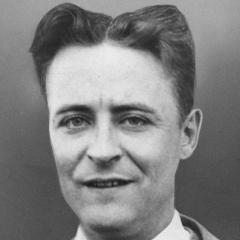
F. Scott Fitzgerald
F. Scott Fitzgerald

F. Scott Fitzgerald was an American author of novels and short stories, renowned for his works that encapsulate the Jazz Age and the Roaring Twenties. His most celebrated novel, 'The Great Gatsby,' is a critical and commercial success, reflecting the themes of the American Dream and the decline of the American upper class. more

You May Also Like

“Spend the glittering moonlight there Pursuing down the soundless deep Limbs that gleam and shadowy hair, Or floating lazy, half-asleep. Dive and double and follow after, Snare in flowers, and kiss, and call, With lips that fade, and human laughter And faces individual, Well this side of Paradise! . . . There's little comfort in the wise.”

“He was changed as completely as Amory Blaine could ever be changed. Amory plus Beatrice plus two years in Minneapolis - these had been his ingredients when he entered St. Regis'. But the Minneapolis years were not a thick enough overlay to conceal the "Amory plus Beatrice" from the ferreting eyes of a boarding school, so St. Regis' had very painfully drilled Beatrice out of him and begun to lay down new and more conventional planking on the fundamental Amory. But both St. Regis' and Amory were unconscious of the fact that this fundamental Amory had not in himself changed. Those qualities for which he had suffered: his moodiness, his tendency to pose, his laziness, and his love of playing the fool, were now taken as a matter of course, recognized eccentricities in a star quarter-back, a clever actor, and the editor of the "St. Regis' Tattler"; it puzzled him to see impressionable small boys imitating the very vanities that had not long ago been contemptible weaknesses.”

“Some searched for metaphors to describe what had happened. Tetiana Pavlychka remembered that her sister Tamara “had a large, swollen stomach, and her neck was long and thin like a bird’s neck. People didn’t look like people — they were more like starving ghosts.” Another survivor remembered that his mother “looked like a glass jar, filled with clear spring water. All her body that could be seen . . . was see-through and filled with water, like a plastic bag.” A third remembered his brother lying down, “alive but completely swollen, his body shining as if it were made of glass”.”

“Голод став зброєю масового знищення українців, на довгі десятиліття порушив їх природний генетичний фонд, призвів до морально-психологічних змін у суспільній свідомості. Був зруйнований традиційний український устрій життя. Внаслідок Голодомору українське суспільство, стало і значною мірою досі залишається травмованим, постгеноцидним. Десятки мільйонів людей, які пережили Голодомор, пройшли через невимовні страждання і просто не могли відкинути цього досвіду. Їхній опір було зламано, а страх повторення Голодомору залишався на довгі десятиліття та призвів до втрати впевненості й ініціативності. На свідомому та підсвідомому рівні травма Голодомору передавалася від батьків до дітей.”