Quotessence
Home / Quotes / Quote by Algernon Blackwood

Quote by Algernon Blackwood

“He painted trees as by some special divining instinct of their essential qualities. He understood them. He knew why in an oak forest, for instance, each individual was utterly distinct from its fellows, and why no two beeches in the whole world were alike. People asked him down to paint a favorite lime or silver birch, for he caught the individuality of a tree as some catch the individuality of a horse. How he managed it was something of a puzzle, for he never had painting lessons, his drawing was often wildly inaccurate, and, while his perception of a Tree Personality was true and vivid, his rendering of it might almost approach the ludicrous. Yet the character and personality of that particular tree stood there alive beneath his brush—shining, frowning, dreaming, as the case might be, friendly or hostile, good or evil. It emerged.”

Quote by Algernon Blackwood

Work

Pan’s Garden: a Volume of Nature Stories

Browse quotes and source details for this work. more

Author
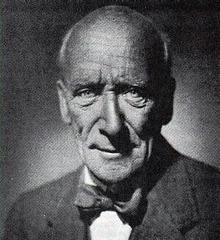
Algernon Blackwood
Algernon Blackwood

Algernon Blackwood was an English writer known for his supernatural and horror fiction. His works often explore the boundaries between human consciousness and the supernatural, enjoying great popularity among readers. more

You May Also Like

“I want you to know, if you ever read this, there was a time when I would rather have had you by my side than any one of these words; I would rather have had you by my side than all the blue in the world. But now you are talking as if love were a consolation. Simone Weil warned otherwise. 'Love is not consolation,' she wrote. 'It is light.' All right then, let me try to rephrase. When I was alive, I aimed to be a student not of longing but of light.”

“All right," I said, still wishing we could talk about Zima rather than me. "But what practical difference does it make whether the artificial memory is inside my head or outside?" "All the difference in the world," Zima said. "The memories stored in the AM are fixed for eternity. You can query it as often as you like, but it will never enhance or omit a single detail. But the implants work differently. They're designed to integrate seamlessly with biological memory, to the point where the recipient can't tell the difference. For that very reason they're necessarily plastic, malleable, subject to error and distortion." "Fallible," I said. "But without fallibility there is no art. And without art there is no truth.”

“Americans have been slow to identify mediocrity because mediocre art simultaneously embraces virtues which both progressives and conservatives hold dear. In order to condemn mediocrity, one must believe that surviving the test of time is a very reliable sign of goodness, and very few persons on the political left would agree to this premise. However, condemning mediocrity also depends upon admitting that, regardless of other boons it might offer society, capitalism has not been good for art, and very few conservatives would admit this.”

“While Spotify openly publishes user listening activity, the “Private Session” option allows users to listen to music they think stupid, immature, or embarrassing apart from their friends’ knowledge. The “Private Session” feature on Spotify subtly reveals how intensely we want our friends to think we have good taste, and yet we are unwilling to suffer any diminution of comfort or pleasure to achieve this distinction. We want to enjoy sensual trash, but we do not want to be held accountable for it.”

“When progressives and Christians speak of “nature,” they are not referring to the same thing. Within the framework of Christian thought, nature can only be understood in its relationship with the supernatural... In cutting nature off from supernature, the Enlightenment inaugurated a long, slowly unfurling contempt for both nature and supernature which reaches new heights every year.”

“Whether a man is concerned with kings, paupers, plants, pandas, minerals, models, math, production, propulsion, or prostitutes, when he learns what usually happens— what usually works, what usually hurts, what is usually said, what is usually felt— a man has discovered something about that thing’s nature. When a man learns that holding very hot things is usually painful, he learns something about his fleshly nature. When a boy learns that lying to his mother usually leads to fear and remorse, he learns something about his spiritual nature. When we observe that dogs usually become ill after eating chocolate, we learn something about canine nature. Tendency and propensity invariably teach us about nature.”

“Apart from a belief in the supernatural, it has become very hard to distinguish the natural from the unnatural. Without Heaven, what is the difference between Hell and Earth? Without God, how can the human and the demonic be told apart? More than two hundred years after the French Revolution, the only people who attack a position or practice as “unnatural” are those who believe in God, as well, because the concept of nature only makes sense as an intermediary between the supernatural and the unnatural.”