Quotessence
Home / Quotes / Quote by George Eliot

Quote by George Eliot

“...the direct external calls on his judgment and sympathies brought the added impulse needed to draw him out of himself. It was not simply that beneficent harness of routine which enables silly men to live respectably and unhappy men to live calmly - it was a perpetual claim on the immediate fresh application of thought, and on the consideration of another's need and trial.”

Quote by George Eliot

Work

Middlemarch

George Eliot's 'Middlemarch' is a comprehensive portrayal of English provincial life in the 1830s. The story follows a diverse cast of characters, including Dorothea Brooke, Tertius Lydgate, and Casaubon, as they navigate personal and societal challenges. The novel delves into themes of ambition, marriage, and the pursuit of knowledge, offering a rich tapestry of human experience. more

Author

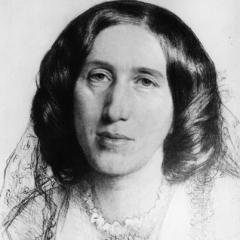
George Eliot
George Eliot

George Eliot, born Mary Ann Evans, was a renowned 19th-century British novelist. Her works are known for their profound psychological insights and critical exploration of social issues. With her unique narrative techniques and rich emotional expression, she has had a profound impact on literature. more

You May Also Like

“Art becomes so specialized as to be comprehensible only to artists, and they complain bitterly of public indifference to their work. Competition arises. The wild battle for success becomes more and more material. Small groups who have fought their way to the top of the chaotic world of art and picture-making entrench themselves in the territory they have won. The public, left far behind, looks on bewildered, loses interest and turns away.”

“Usually, we think of an apple as being red. This is not the same red as that of a cherry or tomato. A lemon is yellow and an orange like that of its name. Bricks vary from beige to yellow to orange, and from ochre to brown to deep violet. Foliage appears in innumerable shades of green. In all these cases the colors named are surface colors. In a very different was, distant mountains appear uniformly blue, no matter whether covered with green trees or consisting of earth and rocks. The sun is glaring white in daytime, but it is full red at sunset. The white ceiling of houses surrounded by lawns or the white-painted eaves of a roof on a sunny day appear in bright green, which is reflected from the grass on the ground. All these cases present film colors. They appear as a thin, transparent, translucent layer between the eye and an object, independent of the object's surface color.”