Quotessence
Home / Quotes / Quote by Brad Warner

Quote by Brad Warner

Work

Author

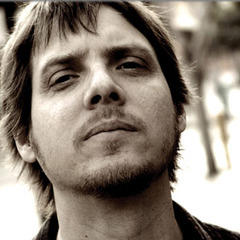
Brad Warner
Brad Warner

Brad Warner, born on March 5, 1964, is an American author known for his works that blend Buddhist philosophy, life wisdom, and humor. Warner combines Buddhist thought with modern life in a unique way, offering readers a distinctive reading experience. more

You May Also Like

“The first mention of Chan appears in [Matteo] Ricci's journals, while Japanese Zen is discussed in the letters of Francis Xavier (1506–1552). The images one gets from these accounts are strikingly different; they reflect not only the idiosyncrasies of the two Jesuits but also the different roles played by Buddhism in Chinese and Japanese societies. Whereas the Buddhist tradition in China, and Chan in particular, had been largely assimilated by popular religion, the Zen sect in Japan, under the system of the so-called Five Mountains, remained associated with the ruling class and dominated intellectual discourse.”

“The Zen sect had been favored by the Ashikaga shogunate and had, during the Ashikaga (Muromachi) and the earlier Kamakura periods, supervised commercial and cultural relations with China through the famous Tenryūbune (Tenryūji ships) sponsored by the Tenryūji branch of the Rinzai school in Kyoto. Zen temples played an important cultural role with their schools, the so-called terakoya, and they controlled the celebrated Ashikaga College (referred to by Xavier as the "University of Bando"), a major center for classical Chinese learning. At the beginning of the Tokugawa period, the temples still had important administrative and diplomatic privileges, for instance in the issuing of passports (Boxer 1951, 262). Only later in that period did Zen suffer a setback owing to the rising tide of Confucian orthodoxy.”

“Suzuki also liked to compare Zen to Western philosophy, to Zen's advantage: "The philosopher according to whom cogito ergo sum is generally weak-minded. The Zen master has nothing to do with such quibbles" (Suzuki 1970, 408). We may also question the accuracy of his understanding of Western philosophy. If Meister Eckhart, despite (or because of) his undeniable spirituality, cannot be said to represent the entire Christian tradition, neither can the intellectualist strain emphasized by Suzuki be said to represent the entire Western philosophical tradition. From the pre-Socratics, Socrates and the Stoics, all the way to Kierkegaard and Nietzsche, philosophy was a path of self-transformation, not merely the intellectual pastime that Suzuki describes.”