Quotessence
Home / Quotes / Quote by Paulo Coelho

Quote by Paulo Coelho

“For those who are not frightened by the solitude, everything will have a different taste. In solitude, they will discover the love that might otherwise arrive unnoticed. In solitude, they will understand and respect the love that left them. In solitude, they will be able to decide whether it is worth asking that lost love to come back or if they should simply let it go and set off along a new path. In solitude, they will learn that saying ‘No’ does not always show a lack of generosity and that saying ‘Yes’ is not always a virtue. And those who are alone at this moment, need never be frightened by the words of the devil: ‘You’re wasting your time.’ Or by the chief demon’s even more potent words: ‘No one cares about you.’ The Divine Energy is listening to us when we speak to other people, but also when we are still and silent and able to accept solitude as a blessing. And when we achieve that harmony, we receive more than we asked for.”

Quote by Paulo Coelho

Work

Manuscript Found in Accra

In this novel, a manuscript discovered in modern-day Accra reveals the secrets of an ancient Egyptian sage. The story intertwines past and present, examining the enduring power of wisdom and the quest for spiritual enlightenment. more

Author
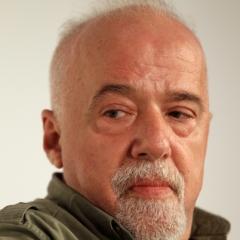
Paulo Coelho
Paulo Coelho

Paulo Coelho, born on August 24, 1947, is a renowned Brazilian author and lyricist. His works are characterized by profound philosophical thoughts and rich imagination, with his most famous novel being 'The Alchemist'. more

You May Also Like

“All men know that by sheer weight of physical force, the mass of men must in the last resort become the arbiters of human action. But reason, skill, wealth, machines and power may for long periods enable the few to control the many. But to what end? The current theory of democracy is that dictatorship is a stopgap pending the work of universal education, equitable income, and strong character. But always the temptation is to use the stopgap for narrower ends, because intelligence, thrift and goodness seem so impossibly distant for most men. We rule by junta; we turn Fascist, because we do not believe in men; yet the basis of fact in this disbelief is incredibly narrow. We know perfectly well that most human beings have never had a decent human chance to be full men. Most of us may be convinced that even with opportunity the number of utter human failures would be vast; and yet remember that this assumption kept the ancestors of present white America long in slavery and degradation. It is then one's moral duty to see that every human being, to the extent of his capacity, escapes ignorance, poverty and crime. With this high ideal held unswervingly in view, monarchy, oligarchy, dictatorships may rule; but the end will be the rule of All, if mayhap All or Most qualify. The only unforgivable sin is dictatorship for the benefit of Fools, Voluptuaries, gilded Satraps, Prostitutes and Idiots. The rule of the famished, unlettered, stinking mob is better than this and the only inevitable, logical and justifiable return. To escape from ultimate democracy is as impossible as it is for ignorant poverty and crime to rule forever.”

“When I found your name, in my early adulthood, I don't think I'd ever heard the term "white working class". The experience it describes contains both racial privilege and economic disadvantage, which can exist simultaneously. This was an obvious, apolitical fact for those of us who lived that juxtaposition every day. But it seemed tomake some people uneasy, as though our grievance put us in competition with poor people of other races. Wealthy white people, in particular, seemed to want to distance themselves from our place and our truth. Our struggles forced a question about America that many were not willing to face: If a person could go to work every day and still not be able to pay the bills and the reason wasn't racism, what less articulated problem was afoot?”