Quotessence
Home / Quotes / Quote by Italo Calvino

Quote by Italo Calvino

“But what enhanced for Kublai every event or piece of news reported by his inarticulate informer was the space that remained around it, a void not filled with words. The descriptions of cities Marco Polo visited had this virtue: you could wander through them in thought, become lost, stop and enjoy the cool air, or run off.”

Quote by Italo Calvino

Work

Invisible Cities

In this novel, the traveler Marco Polo recounts his journeys to a series of cities that exist beyond the physical world, each city embodying a different aspect of human life and culture. The ruler, Kublai Khan, listens intently, intrigued by the stories of places that are both real and imagined. The narrative delves into themes of perception, power, and the essence of existence. more

Author

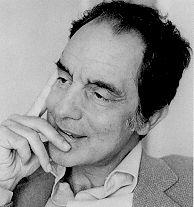
Italo Calvino
Italo Calvino

Italian writer and journalist, known for his unique narrative style and rich imagination. Calvino is considered one of the greatest writers of the 20th century, whose works have had a profound impact on literature both in Italy and around the world. more

You May Also Like

“My spiritual pursuits gained me nothing. It was as if the Higher Power I was seeking was nothing more than the sum of my favorite thoughts and ideas. It could not answer my prayers, change my circumstances, or do anything objective at all in my life. It was basically a figment of my imagination. I was a part of it, and it was a part of me, but it was not beyond me, above me, or separate from me. At its very best, it could maybe help me to massage my own psyche, but I needed objective, concrete, and tangible help, love, and guidance. I didn’t need an ethereal spirituality, I needed something pragmatic and real. I was tired of building my life on a flimsy foundation.”

“Atheism leaves a man to sense, to philosophy, to natural piety, to laws, to reputation; all which may be guides to an outward moral virtue, though religion were not; but superstition dismounts all these, and erecteth an absolute monarchy in the minds of men. Therefore atheism did never perturb states; for it makes men wary of themselves, as looking no further: and we see the times inclined to atheism (as the time of Augustus Cæsar) were civil times. But superstition hath been the confusion of many states, and bringeth in a new primum mobile, that ravisheth all the spheres of government. The master of superstition is the people; and in all superstition wise men follow fools; and arguments are fitted to practice, in a reversed order.”